Timeline of the 1983 Atlantic hurricane season
| Timeline of the 1983 Atlantic hurricane season | |||||
|---|---|---|---|---|---|
Season summary map | |||||
| Season boundaries | |||||
| First system formed | July 23, 1983 | ||||
| Last system dissipated | September 30, 1983 | ||||
| Strongest system | |||||
| Name | Alicia | ||||
| Maximum winds | 115 mph (185 km/h) (1-minute sustained) | ||||
| Lowest pressure | 962 mbar (hPa; 28.41 inHg) | ||||
| Longest lasting system | |||||
| Name | Barry | ||||
| Duration | 6 days | ||||
| |||||
The 1983 Atlantic hurricane season was an event in the annual tropical cyclone season in the north Atlantic Ocean. It was the least active Atlantic hurricane season in 53 years.[1] The season officially began on June 1, 1983 and ended November 30, 1983. These dates, adopted by convention, historically describe the period in each year when most systems form.[2] The first named storm, Hurricane Alicia, formed on August 15. The last storm of the season, Tropical Storm Dean, dissipated on September 30.
This season produced seven tropical depressions, of which four became named storms; three attained hurricane status, of which one became a major hurricane, a storm that ranks as a Category 3 or higher on the Saffir–Simpson scale.[3] In all, three systems made landfall this season: Hurricane Alicia (in Southeast Texas), Hurricane Barry (in Florida and near the Mexico–Texas border), and Tropical Storm Dean (on the Delmarva Peninsula.
This timeline documents tropical cyclone formations, strengthening, weakening, landfalls, extratropical transitions, and dissipations during the season. It includes information that was not released throughout the season, meaning that data from post-storm reviews by the National Hurricane Center, such as a storm that was not initially warned upon, has been included.
The time stamp for each event is stated using Coordinated Universal Time (UTC), the 24-hour clock where 00:00 = midnight UTC.[4] and the time zone where the center of the tropical cyclone is currently located. The time zones utilized (east to west) prior to 2020 were: Atlantic, Eastern, and Central.[5] In this timeline, the respective area time is included in parentheses. Additionally, figures for maximum sustained winds and position estimates are rounded to the nearest 5 units (miles, or kilometers), following National Hurricane Center practice. Direct wind observations are rounded to the nearest whole number. Atmospheric pressures are listed to the nearest millibar and nearest hundredth of an inch of mercury.
Timeline
June
- No tropical cyclones formed during the month of June.
June 1
- The Atlantic hurricane season officially begins.[6]
July
July 23
- 8 a.m. AST (1200 UTC) – Tropical Depression One forms 955 miles (1,540 km) southwest of Brava, Cape Verde.[7]
July 27
- 8 a.m. AST (1200 UTC) – Tropical Depression One passes over the island of Saint Lucia with winds of 35 mph (55 km/h).[7]
- 8 a.m. AST (1200 UTC) – Tropical Depression Two forms 245 miles (395 km) southwest of Brava, Cape Verde.[7]
July 28
- 2 p.m. AST (1800 UTC) – Tropical Depression One dissipates over the open waters of the Caribbean.[7]
August
August 2
- 8 a.m. AST (1200 UTC) – Tropical Depression Two dissipates over open waters.[7]
August 15
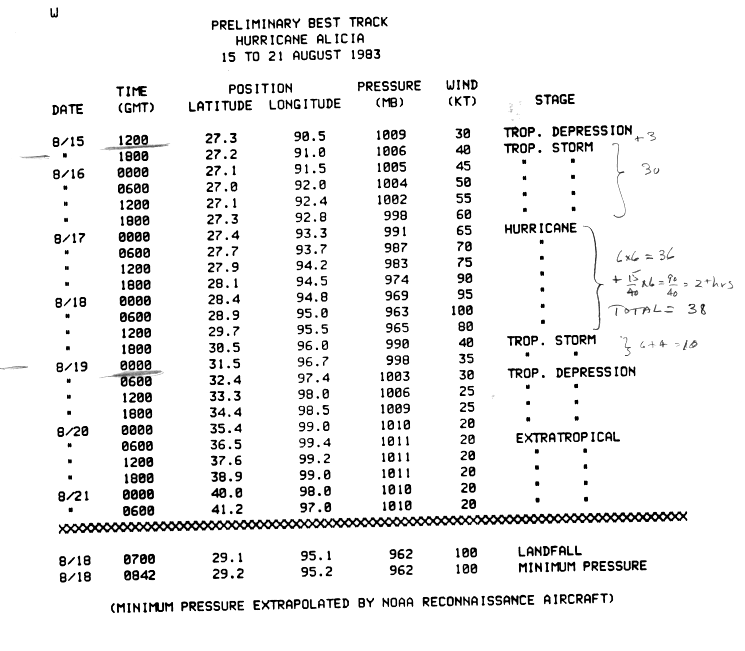
- 7 a.m. CDT (1200 UTC) – Tropical Depression Three forms 185 miles (295 km) south-southwest of New Orleans, Louisiana.[8]
- 1 p.m. CDT (1800 UTC) – Tropical Depression Three strengthens into Tropical Storm Alicia.[8]
August 16
- 7 p.m. CDT (0000 UTC August 17) – Tropical Storm Alicia intensifies into a hurricane.[8]
August 17
- 1 p.m. CDT (1800 UTC) – Hurricane Alicia strengthens into a Category 2 hurricane.[8]
August 18
- 1 a.m. CDT (0600 UTC) – Hurricane Alicia strengthens into a major hurricane—a storm with winds of 111 miles per hour (179 km/h) or higher.[8]
- 3 a.m. CDT (0800 UTC) – Hurricane Alicia makes landfall near Galveston, Texas, with winds of 115 mph (185 km/h).[8]
- 7 a.m. CDT (1200 UTC) – Hurricane Alicia weakens to a Category 1 hurricane.[8]
- 1 p.m. CDT (1800 UTC) – Hurricane Alicia weakens to a tropical storm.[8]
August 19
- 1 a.m. CDT (0600 UTC) – Tropical Storm Alicia weakens to a tropical depression.[8]
August 20
- 1 a.m. CDT (0600 UTC) – Tropical Depression Alicia transitions into an extratropical cyclone while located over Nebraska.[8]
August 23
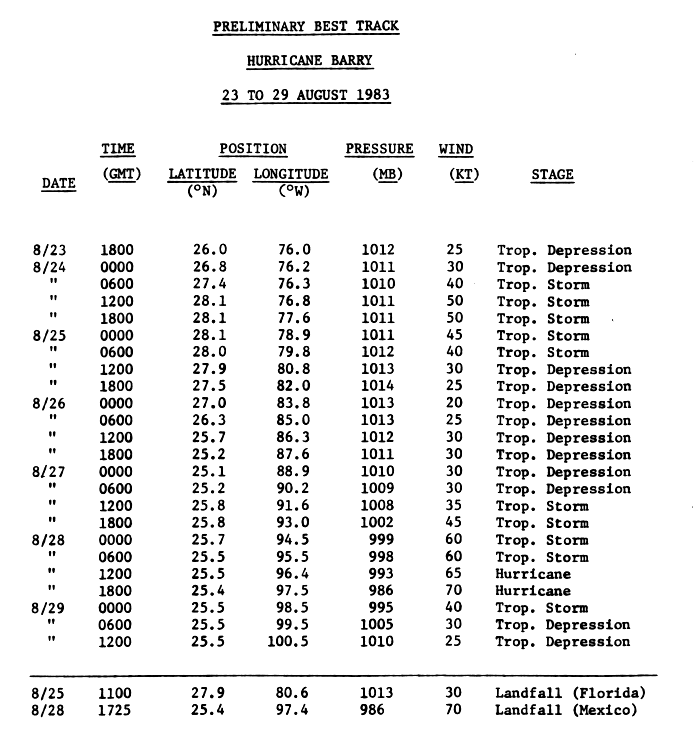
- 2 p.m. EDT (1800 UTC) – Tropical Depression Four forms 105 miles (175 km) northeast of Nassau, Bahamas.[9]
August 24
- 2 a.m. EDT (0600 UTC) – Tropical Depression Four strengthens into Tropical Storm Barry.[9]
August 25
- 7 a.m. EDT (1100 UTC) – Tropical Storm Barry weakens to a tropical depression and makes landfall near Melbourne, Florida, with winds of 35 mph (55 km/h).[9]
August 26
- 2 a.m. EDT (0600 UTC) – Tropical Depression Barry emerges into the Gulf of Mexico.[9]
August 27
- 7 a.m. CDT (1200 UTC) – Tropical Depression Barry re-intensifies into a tropical storm.[9]
August 28
- 7 a.m. CDT (1200 UTC) – Tropical Storm Barry strengthens into a hurricane.[9]
- 12:25 CDT (1725 UTC) – Hurricane Barry makes landfall in northern Tamaulipas, Mexico with winds of 80 mph (130 km/h).[9]
- 7 p.m. CDT (0000 UTC August 29) – Hurricane Barry weakens to a tropical storm.[9]
August 29
- 1 a.m. CDT (0600 UTC) – Tropical Storm Barry weakens to a tropical depression.[9]
- 1 p.m. CDT (1800 UTC) – Tropical Depression Barry dissipates over Mexico.[9]
September
September 10
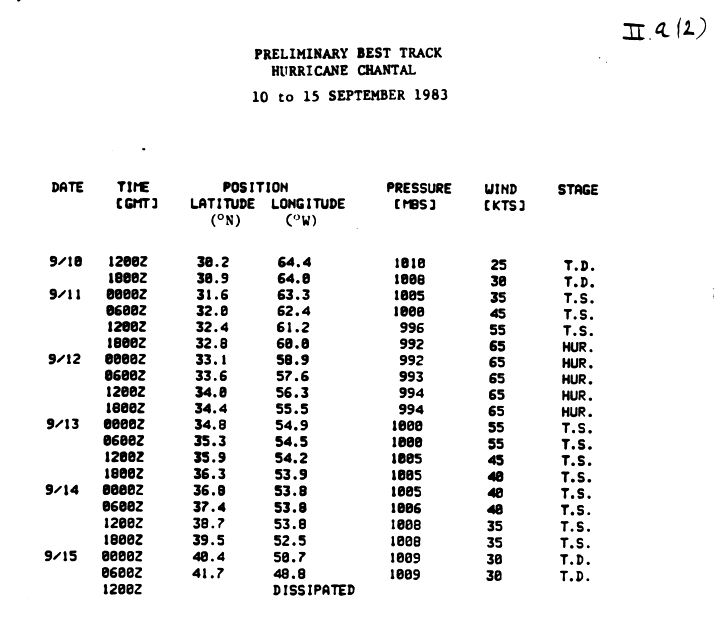
- 8 a.m. AST (1200 UTC) – Tropical Depression Five forms 145 miles (235 km) south-southeast of Bermuda.[10]
- 8 p.m. AST (0000 UTC September 11) – Tropical Depression Five strengthens into Tropical Storm Chantal.[10]
September 11
- 2 p.m. AST (1800 UTC) – Tropical Storm Chantal intensifies into a hurricane.[10]
September 12
- 8 p.m. AST (0000 UTC September 13) – Hurricane Chantal weakens to a tropical storm.[10]
September 14
- 8 p.m. AST (0000 UTC September 15) – Tropical Storm Chantal weakens to a tropical depression.[10]
September 15
- 8 a.m. AST (1200 UTC) – Tropical Depression Chantal dissipates over open waters.[10]
September 19
- exact time unknown – Tropical Depression Six forms near the Lesser Antilles.[11]
September 21
- exact time unknown – Tropical Depression Six degenerates into a tropical wave over the Dominican Republic.[12]
September 26
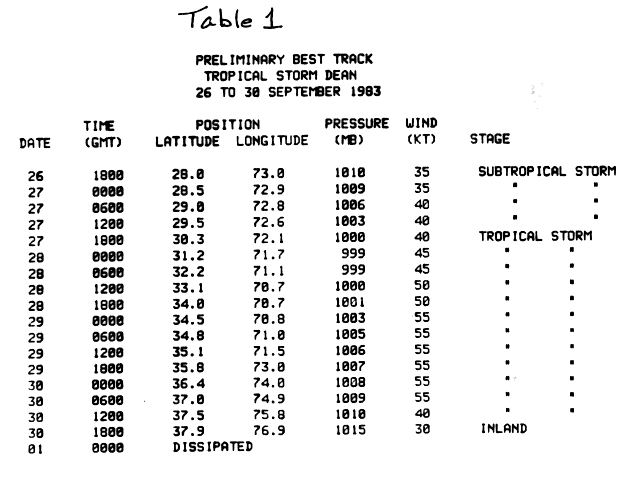
- 2 p.m. EDT (1800 UTC) – Subtropical Storm One forms 335 miles (540 km) northeast of Nassau, Bahamas.[13]
September 27
- 2 p.m. EDT (1800 UTC) – Subtropical Storm One transitions into a tropical cyclone and is given the name Dean.[13]
September 30
- 8 a.m. EDT (1200 UTC) – Tropical Storm Dean makes landfall on the Delmarva Peninsula with winds of 45 miles per hour (72 km/h).[13]
- 2 p.m. EDT (1800 UTC) – Tropical Storm Dean weakens to a tropical depression.[13]
- 8 p.m. EDT (0000 UTC October 1) – Tropical Depression Dean dissipates over Virginia.[13]
October
- No tropical cyclones formed during the month of October.
November
- No tropical cyclones formed during the month of November.
November 30
- The Atlantic hurricane season officially ends.[6]
See also
References
- ^ John Arnold (1983-11-30). "Hurricane season ends weakly". The Philadelphia Inquirer. Retrieved 2007-12-16.
- ^ Dorst, Neal (June 1, 2018). "Hurricane Season Information". Frequently Asked Questions About Hurricanes. Miami, Florida: NOAA Atlantic Oceanographic and Meteorological Laboratory. Retrieved June 29, 2020.
- ^ "Atlantic hurricane best track ("HURDAT")". NHC Hurricane Research Division. 2006-02-17. Archived from the original on 2008-09-16. Retrieved 2008-11-03.
- ^ "What is UTC or GMT Time?". Miami, Florida: National Hurricane Center. Retrieved February 2, 2026.
- ^ "Update on National Hurricane Center Products and Services for 2020" (PDF). Miami, Florida: National Hurricane Center. April 20, 2020. Archived (PDF) from the original on August 27, 2021. Retrieved May 17, 2020.
- ^ a b Atlantic Oceanographic and Meteorological Laboratory, Hurricane Research Division. "Frequently Asked Questions: When is hurricane season?". National Oceanic and Atmospheric Administration. Archived from the original on 2006-07-18. Retrieved 2008-11-03.
- ^ a b c d e National Hurricane Center (2008). "All Tropical Cyclone Tracks for the Atlantic and Eastern Pacific". Hydrometeorological Prediction Center. Retrieved 2008-11-20.
- ^ a b c d e f g h i j National Hurricane Center (1983). "Hurricane Alicia Preliminary Report Page 6". National Hurricane Center. Retrieved 2008-11-20.
- ^ a b c d e f g h i j National Hurricane Center (1983). "Hurricane Barry Preliminary Report Page 3". National Hurricane Center. Retrieved 2008-11-20.
- ^ a b c d e f National Hurricane Center (1983). "Hurricane Chantal Preliminary Report Page 2". National Hurricane Center. Retrieved 2008-11-20.
- ^ Miami Herald (September 19, 1983). "New Tropical Depression Forms, Aims Toward Windwards". The Miami Herald. Retrieved 2007-02-02.
- ^ Miami Herald (September 21, 1983). "Caribbean Storm Downgraded". The Miami Herald. Retrieved 2007-02-02.
- ^ a b c d e National Hurricane Center (1983). "Tropical Storm Dean Preliminary Report Page 3". National Hurricane Center. Retrieved 2008-11-20.
External links
- nhc.noaa.gov, National Hurricane Center homepage