Sri Lankans in Japan
在日スリランカ人 Zainichi Surirankajin | |
|---|---|
| Total population | |
| 73,067 (in June, 2025)[1][2] | |
| Regions with significant populations | |
| Tokyo, Ibaraki, Chiba, Funabashi, Kawasaki, Sagamihara, Saitama, Yokohama | |
| Languages | |
| Sinhala, Tamil, English, Japanese | |
| Religion | |
| Buddhism, Hinduism, Islam, Christianity |
Sri Lankans in Japan consist of Sri Lankan migrants that come to Japan, as well as their descendants. In June 2024, there were 73,067 Sri Lankans living in Japan making it the 9th largest foreign community in Japan.[1][3]
History
Edo period and imperial Japan
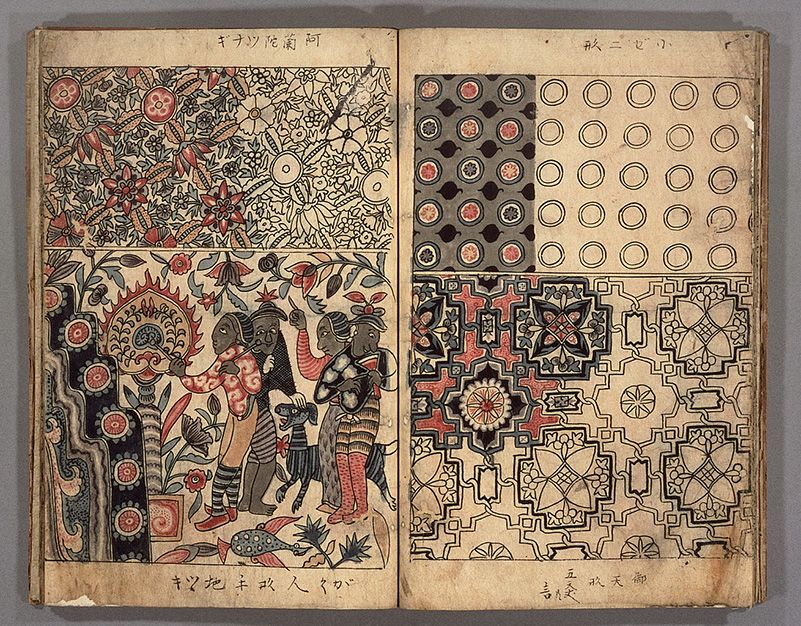
Ceylon, the name of the island since the Portuguese conquest, was one of the largest strongholds of the Dutch East India Company, which stretched across the Indian Ocean from Dejima in Nagasaki to Cape Town in South Africa. The Dutch-Ceylonese would continue to influence the country strongly throughout British Ceylon due to the expertise they had in administration, and retained strong connections with the trade infrastructure Dutch East India Company while assuming the connections of the British East India Company. Japan maintained links to Ceylon through the various colonial companies and administrations.[4] Artwork from the Edo period shows Indians with their stereotpical dark brown skin and colourful patterns of the Coromandel design;[5] many of the sepoys and merchants working on the Dutch East India Company ships to Dejima were of Indian/Ceylonese descent.[6]
Ceylon became an important symbolic battleground during the Pacific Threater of WWII. The Japanese were the main antagonist of the war progranda by the allies of WWII in Ceylon. Ceylon was the headquarters of the South East Asian division of the British Navy and a major base for British Indian military operations in southern Asia. It was also viewed as a important base for the Empire of Japan.[7][8]
During the Japanese occupation of Malaya, the Indian National Army (INA) established its primary operational bases within the region. Ceylonese volunteers were categorized by the Japanese administration under the broader classification of "Indians", though a specific regiment for Ceylon also existed. Following the Fall of Singapore in 1942, the Japanese military administration facilitated the INA's reorganization, utilizing the Malay Peninsula and Singapore as central hubs for recruitment and training among the local Ceylonese diasporas. A plan was made to transport them to Ceylon by submarine, to begin the independence struggle, but this was abortive. The Kandy Conference in Ceylon was the location where former Imperial Japan forces of Burma met with British authorities in the aftermath of the Japanese surrender to decide on their new future.[9][7]
Modern
A number of the Indians from South East Asian were historically categorised as "Indians" but otherwise have a lineage to Sri Lanka. Sri Lankans were also often chosen to work in administrative roles in the East India Companies due to being colonised by the Portuguese, Dutch and British at an earlier stage and having a higher literacy rate.[10] Trade was often imported and exported from Nagasaki to Ceylon by the Dutch East India Company, such as kimonos[11] and copper.[12]
Japan is the leading team in rugby in Asia, and Sri Lanka is the leading Asian rugby team outside East Asia (ranking fifth overall, formerly second behind only Japan).[13] Being one of the leading teams in Asia, Sri Lanka has played a number of competitive matches in Japan and plays friendly matches on a frequent basis. However Sri Lanka has lost every single competitive match it has played against Japan.
Japan has become a popular destination for university students from Sri Lanka; advice given to prospective new students includes learning Japanese and learning about local customs and mannerisms.[14] An ever increasing number of children from ethnic Sri Lankan background study at schools in Japan.[15] Universities in Japan have started offering incentives to students from Sri Lanka.[16]
Sri Lankans fill a gap in a number of professional categories including healthcare and ICT. Sri Lankans also have access to the 'Special Skilled Worker' category in nursing care, food service, construction and agriculture.[17]Japan has targeted South Asia and South East Asia as sources for talent.[18]
Schools in Sri Lanka offer training in the Japanese language at O-Level and A-Level targeting employment in 14 sectors including nursing, hospitality, building cleaning, agricultural activities, motor mechanics, electronics and electrical engineering.[19]
In May 2024 a 31-year-old woman from Sri Lanka who came to Japan in 2018 as the first technical intern trainee in the caregiving field completed her education and obtained a qualification as a caregiver.[20]
Issues
As with many Southeast Asian countries, corrupt predatory brokers often lure students and other workers into a cycle of debt by charging exorbitant recruitment fees that can require years of labor in Japan just to repay. Such emigration from Sri Lanka is often supported by Sri Lankan politicians and other connected figures such as brokers to take advantage of Japanese immigration issues, leveraging their influence to control recruitment agencies or bypass regulatory oversight for financial gain.[21] Emigrants are frequently duped by recruitment intermediaries and politically-connected sub-agents into paying unauthorized fees exceeding 1 million LKR, a practice that forces emigrants into debt to these brokers from Sri Lanka prior to arrival.[22][23] With institutional corruption, the ecosystem of immigration is fueled by a "immigration industry" consisting of unregulated politically-connected people, NGOs, and others who push emigration for personal financial gain.[24][25]
Of the seventeen deaths involving immigration detention by all nationalities, one death of a Sri Lankan national who had overstayed her visa led to a campaign by the relatives of the deceased to obtain compensation. Other deaths include that of an Indian national, Nigerian national and Vietnamese national.[26]
While they do not rank among the top nationalities for criminal offenses—a list consistently dominated by the much larger Vietnamese and Chinese populations—Sri Lankan nationals have been specifically noted by the National Police Agency (NPA) for involvement in specialized organized crime, along with Pakistani and Russian groups, rank in the top five nationalities involved in organized vehicle theft rings targeting high-end automobiles for international export.[27] Nevertheless, the per capita rate for the Sri Lankan community for crime, such as violent crime or petty theft, remains lower than the national average for foreign residents.[28] Statistical data indicates that a significant portion of crimes attributed to foreign nationals in Japan involve "Special Law" violations, such as overstaying visas, rather than traditional criminal activity.[29] When adjusted for the predominantly younger age demographic of the community, the crime rate among resident Sri Lankans is comparable to that of Japanese citizens in the same age brackets.
See also
References
- ^ a b "【在留外国人統計(旧登録外国人統計)統計表】 | 出入国在留管理庁".
- ^ Cite error: The named reference
令和7年6月末現在における在留外国人数についてwas invoked but never defined (see the help page). - ^ 令和6年末現在における在留外国人数について
- ^ Schrikker, Alicia (2011). "Caught Between Empires. VOC Families in Sri Lanka after the British Take-over, 1806-1808". Annales de démographie historique (in French). 122 (2): 127–147. doi:10.3917/adh.122.0127. ISSN 0066-2062.
- ^ "Exotic patterns featuring animals and human figures from a book from the Edo period". 2013-09-18. Retrieved 2024-06-08.
- ^ Odegard, Erik (July 2022). "In search of sepoys: Indian soldiers and the Dutch East India Company in India and Sri Lanka, 1760–1795". War in History. 29 (3): 543–562. doi:10.1177/09683445211030301. ISSN 0968-3445.
- ^ a b "INA as seen by a Ceylonese recruit". Hindustan Times. 2006-04-17. Retrieved 2024-03-29.
- ^ Wijesuriya, Lara; Nihara De Alwis (2021). "'Every Ounce They Can': Empire and the Ceylonese War Effort in British Propaganda, 1939-1945". doi:10.13140/RG.2.2.29616.48640.
- ^ "Kandy Conference". Academic Dictionaries and Encyclopedias. Retrieved 2024-06-04.
- ^ Balakrishnan, Preveena (2022-07-12). "Malaya's Ceylonese Connection - Penang Monthly". penangmonthly.com. Retrieved 2024-03-28.
- ^ "The Fascination with Japanese-Styled Gowns: A Quantitative Perspective on Ready-Made Garments at the Beginning of the Eighteenth Century". Journal of Historians of Netherlandish Art. Retrieved 2024-05-07.
- ^ Glamann, Kristof (July 1953). "The Dutch East India company's trade in Japanese copper, 1645–1736". Scandinavian Economic History Review. 1 (1): 41–79. doi:10.1080/03585522.1953.10409899. ISSN 0358-5522.
- ^ worldrugby.org. "Women's and Men's Rankings | World Rugby". www.world.rugby. Retrieved 2024-05-29.
- ^ "Embracing Cultural Exchange and Learning Opportunities: A Sri Lankan Student's Journey in Japan". SYNODOS (in Japanese). 2023-04-19. Retrieved 2024-05-22.
- ^ "Amid Sri Lankan immigration boom, local univ. assists staff, kids at east Japan schools". Mainichi Daily News. 2023-02-01. Retrieved 2024-05-22.
- ^ "Sri Lanka's Worrying Exodus". thediplomat.com. Retrieved 2024-05-22.
- ^ "Sri Lankan youths conditionally allowed entry to Japan under 'Special Skilled Worker' visa category". www.adaderana.lk. Retrieved 2024-05-22.
- ^ "Japan targets India and Southeast Asia to recruit tech workers". Nikkei Asia. Retrieved 2024-05-29.
- ^ "Sri Lanka to teach Japanese at school level targeting jobs in Japan". EconomyNext. 2022-08-09. Retrieved 2024-05-29.
- ^ "Sri Lankan, 1st technical intern in Japan nursing care, obtains national qualification". Mainichi Daily News. 2024-05-16. Retrieved 2024-05-29.
- ^ Amnesty International, Japan: Flawed technical intern training program replaced, 2023.
- ^ Recruitment fees and related costs in Sri Lanka (Report). International Labour Organization. 2024.
- ^ Integrity in Foreign Employment (PDF) (Report). Transparency International Sri Lanka. 2024.
- ^ Amnesty International, Japan: Flawed technical intern training program replaced, 2023.
- ^ Ministry of Manpower (Singapore), Employment of Foreign Manpower Act, 2024.
- ^ Sim, Walter (2021-04-24). "A Sri Lankan's tragic death in Japan casts a harsh spotlight on controversial refugee system". The Straits Times. ISSN 0585-3923. Retrieved 2024-05-29.
- ^ Criminal Statistics in 2024: Special Report on Organized Vehicle Theft (Report). National Police Agency of Japan. 2024.
- ^ White Paper on Crime 2025. Ministry of Justice, Japan. 2025.
- ^ "Reported crimes rise for third consecutive year, government data reveals". The Japan Times. December 19, 2025.