Paul A. Baran
Paul Alexander Baran | |
|---|---|
Economist Paul A. Baran as he appeared in the late 1950s | |
| Born | 30 August 1909 |
| Died | 26 March 1964 (aged 54) Palo Alto, California, U.S. |
| Academic background | |
| Influences | Karl Marx, Michał Kalecki, Josef Steindl, John Kenneth Galbraith |
| Academic work | |
| Discipline | Macroeconomics |
| School or tradition | Neo-Marxian economics[1] |
| Notable ideas | Law of rising surplus |
| Part of a series about |
| Imperialism studies |
|---|
Paul Alexander Baran (/ˈbærən/; 30 August 1909 – 26 March 1964) was an American Marxian economist. In 1951, he was promoted to full professor at Stanford University and became the only tenured Marxist teaching economics in the U.S. until his death in 1964.[3] He wrote The Political Economy of Growth in 1957, and then co-authored with Paul Sweezy the seminal economics text, Monopoly Capital, published posthumously in 1966.[4]
Life and work
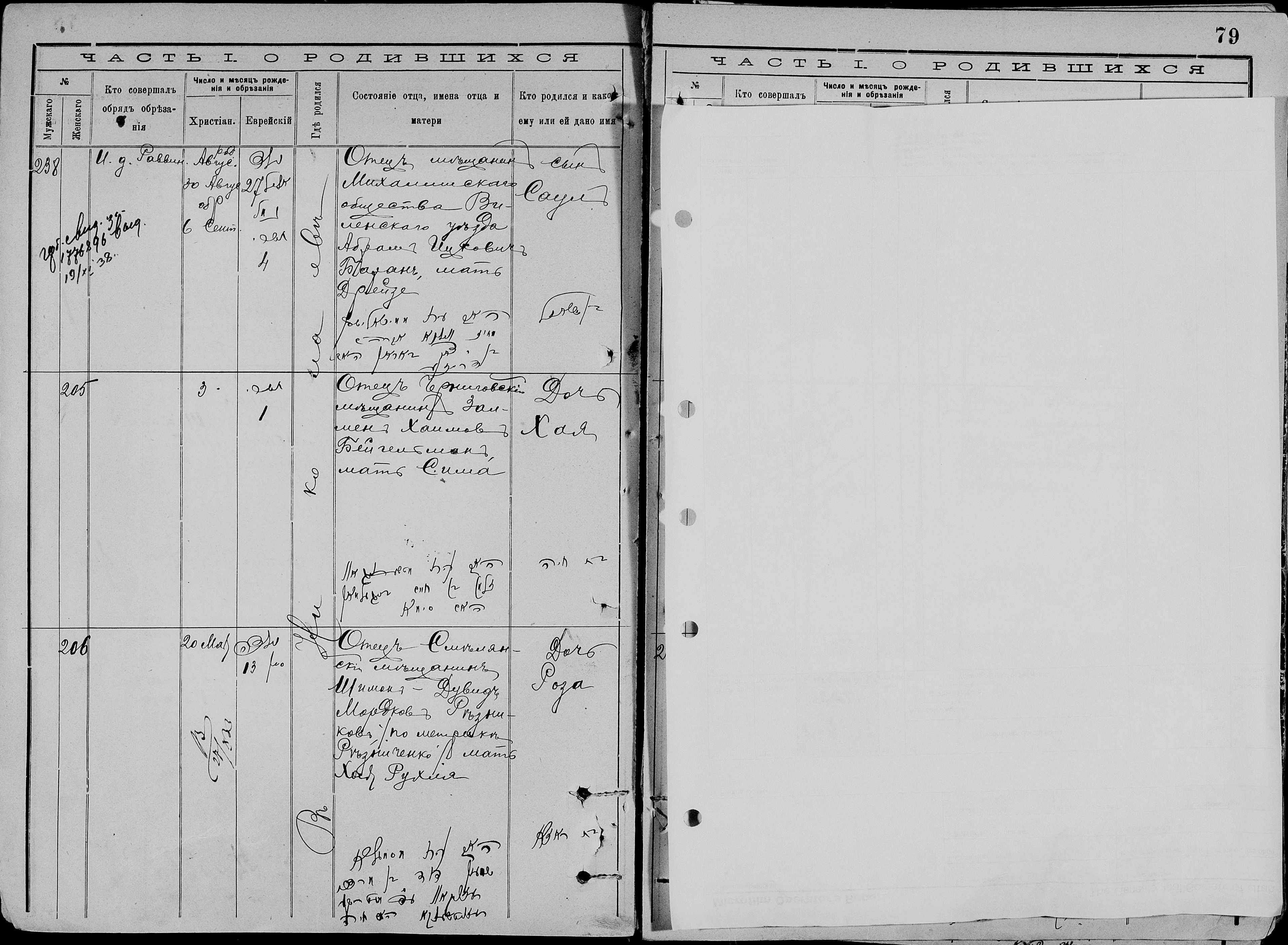
Baran was born as Saul Baran in Mykolaiv, Imperial Russia, on August 30, 1909.[5] His father, a Menshevik, left Russia for Vilnius, Lithuania in 1917. From Vilna the Baran family moved to Berlin, and then in 1925 back to Moscow, but Paul stayed in Germany to finish his secondary school. In 1926 he attended the Plekhanov Institute in Moscow. He left again for Germany in 1928, accepting an appointment as an assistant on agricultural research with his advisor, Dr. Friedrich Pollock. In his formative years in the 1920s, Baran studied Marxist doctrine and joined socialist youth groups.[2]
He remained in Germany and was associated with the Frankfurt School Institute for Social Research. He then received a Diplom-Volkswirt (graduate degree in political economy, equivalent to a master's degree) in 1931 from the Schlesische Friedrich-Wilhelms-Universität zu Breslau. While in Breslau, he participated in the fight against rising Hitlerism by speaking at trade union meetings, authoring articles and leaflets, and giving radio broadcasts.[6] Under the guidance of Emil Lederer, Baran completed his dissertation on economic planning and received a PhD in April 1933 from the University of Berlin.[2] Earlier that year, he met with noted Marxist economist Rudolf Hilferding, author of Finance Capital.[7] During this time, Baran was writing articles under the pen name of "Alexander Gabriel" (reportedly to protect his parents in the USSR) for the German Social Democratic Party journal Die Gesellschaft.[8]
After the Nazi regime consolidated power, Baran fled to Paris in May 1933 where he did research jobs. In 1934 he obtained a visa to visit his parents in the USSR. Next, he went to Vilnius, then to Warsaw, and from there to London.[9] In 1939, with the signing of the Molotov–Ribbentrop Pact and just before the Nazi invasion of Poland,[8] Baran emigrated to the U.S. where he enrolled at Harvard and received a master's degree.[10]
Short of funds, he left the Harvard PhD program and obtained a series of positions during World War II: first, a research fellowship at the Brookings Institution where he worked on problems of price controls; then, a brief stint at the Office of Price Administration; and from 1942–45, he was in the U.S. Army, assigned as an economist to the Office of Strategic Services (OSS) where he attained the rank of Technical Sergeant.[11] In 1945 he contributed to the U.S. Strategic Bombing Survey, working under the direction of John Kenneth Galbraith and traveling to post-war Germany and Japan.[12] In 1946, he held a post with the U.S. Department of Commerce and lectured at George Washington University.[13] Next, he spent three years with the Federal Reserve Bank of New York before resigning to join academia.[11]
Baran was hired as an associate professor at Stanford University in 1949; two years later, he was promoted to full professor with tenure.[2] As economist Robert Heilbroner wrote, "Until his death in 1964, Paul Baran was virtually the only left-wing Marxist economist in the United States who held a full-time academic appointment. Since he was nothing if not outspoken in his beliefs, he was undoubtedly a trial for the authorities at Stanford, who, to their credit, resisted continual pressure from patriotic organizations to fire him."[14] Notable among Baran's Stanford students was the future Marxist economist Richard D. Wolff.[15]
In 1949, Baran initiated an active partnership with the newly formed leftist magazine, Monthly Review, edited by Paul Sweezy and Leo Huberman. Baran helped to set the magazine's intellectual direction.[16] A few years earlier, he had tried unsuccessfully to launch his own weekly magazine which he hoped would be an American equivalent to The Economist.[2]
Baran was married once, to Elena Djatschenko. They met shortly after he began teaching at Stanford. Before divorcing, they had a son Nicholas born in April 1952.[17] Nicholas became an attorney and a computer technology journalist. He co-edited the book of his father's correspondence.[18]
In 1960, Baran visited post-revolutionary Cuba along with Sweezy and Huberman, and was greatly inspired. As a warning sign of his declining health, Baran suffered a heart attack in December 1960, but he recovered sufficiently to continue working and traveling.[11] In 1962 he visited Moscow, Iran, and Yugoslavia. In his last years, he worked intensively with Sweezy on their analysis of the modern American economy, Monopoly Capital. In March 1964, at age 54, Baran suffered a fatal heart attack before the book could be completed.[4] Sweezy went on to finish Monopoly Capital and shared the writing credit with Baran when it was published in 1966.[19]
Economic ideas
Baran's ideas were part of the Neo-Marxian economics school. He introduced the "law of rising surplus" to deal with novel complexities raised by the dominance of monopoly capital.[14] With Sweezy, Baran explained the importance of this idea, its consistency with Marx's labor concept of value, and its relation to Marx's notion of surplus value.[20] According to Baran's categories, as specified in The Political Economy of Growth (1957), "Actual economic surplus" is "the difference between society's actual current output and its actual current consumption. It is thus identical to current saving or accumulation". "Potential economic surplus", in contrast, is "the difference between the output that could be produced in a given natural and technical environment with the help of employable productive resources, and what might be regarded as essential consumption."[21] Baran also discussed the concept of "planned economic surplus"—a category that could only be operationalized in a rationally planned socialist society. This was defined as "the difference between society's 'optimum' output available in a historically given natural and technological environment under conditions of planned 'optimal' utilization of all available productive resources, and some chosen 'optimal' volume of consumption."[22]
In The Political Economy of Growth—which sold over 50,000 copies and was translated into eight languages—Baran employed the surplus concept to analyze underdeveloped countries.[2] In Monopoly Capital, he and Sweezy applied the concept to the contemporary U.S. economy, which they claimed had entered the monopoly capitalism stage[23] where the law of rising surplus superseded the classical Marxist law of the falling rate of profit.[24] In 2017, Monthly Review Press published selected letters between Baran and Sweezy. Their correspondence illuminates the development of their ideas on political economy, and in particular, their collaboration in writing Monopoly Capital.[25][26]
Selected bibliography
- Baran, Paul A. (January 1952). "On the Political Economy of Backwardness". The Manchester School. 21 (1): 66–84.
- Baran, Paul A. (October 1952). "Fascism in America". Monthly Review. Vol. 4, no. 6. pp. 181–89. Published under the pseudonym "Historicus".
- Baran, Paul A. (1957), The Political Economy of Growth, Monthly Review Press. LCCN 57-7953[27]
- Baran, Paul A. (1959). "Reflections on underconsumption". In Abramovitz, Moses (ed.). The Allocation of Economic Resources: Essays in Honor of Bernard Francis Haley. Stanford, California: Stanford University Press. LCCN 59-7420. OCLC 490147128.
- Baran, Paul A. (1960), Marxism and Psychoanalysis [pamphlet] Monthly Review Press.
- Baran, Paul A. (1961), The Commitment of the Intellectual, [pamphlet] Monthly Review Press.
- Baran, Paul A. (1961), Reflections on the Cuban Revolution, [pamphlet] Monthly Review Press.
- Baran, Paul A.; Sweezy, Paul M. (Winter 1964). "Theses on Advertising". Science & Society. 28 (1): 20–30. JSTOR 40401000.
- Baran, Paul A.; Sweezy, Paul M. (1966), Monopoly Capital: An Essay on the American Economic and Social Order, Monthly Review Press. LCCN 65-15269.
- Baran, Paul A. (1970). O'Neill, John (ed.). The Longer View: Essays toward a Critique of Political Economy. Monthly Review Press. ISBN 978-0853451136.
- Baran, Paul A.; Sweezy, Paul M. (July–August 2013). "The Quality of Monopoly Capitalist Society: Culture and Communications". Monthly Review. Vol. 65, no. 3. Contains the text of an unfinished chapter originally intended for inclusion in Monopoly Capital.
References
- ^ Khan, Shahrukh Rafi (2014). A History of Development Economics Thought: Challenges and Counter-challenges. New York: Routledge. pp. 39–42. ISBN 978-0415676304.
- ^ a b c d e f Reder, Melvin W.; Tarshis, Lorie; Smith, Thomas C. "Memorial Resolution: Paul A. Baran" (PDF). Stanford Historical Society. Archived from the original (PDF) on July 7, 2010.
- ^ Foster, John Bellamy (July–August 2016). "'Monopoly Capital' at the Half-Century Mark". Monthly Review. Vol. 68, no. 3.
- ^ a b McChesney, Robert W. "The Monthly Review Story: 1949–1984". Monthly Review Foundation. Archived from the original on November 7, 2009.
- ^ Saul Baran's birth record on August 30 and circumcision on September 6, 1909 in the Office of Nikolayev Municipal Rabbi
- ^ Baran, Paul A. (January 2016). "No Vacation from Politics". Monthly Review. Vol. 67, no. 8. This article transcribes a May 29, 1931 radio talk by Baran on the Silesian Broadcasting Corporation in which he warned listeners "that with the spectre of Hitler, this was no time to take a break from political engagement."
- ^ Foster 2017, p. 17: "In early February 1933, a few days after Hitler was appointed chancellor and prior to the Reichstag fire, Baran met with Hilferding and discussed the dangers of Hitler’s rise to power. Hilferding still thought the constitutional order would hold and downplayed Baran's concerns, seeing him as overall too radical. A few days later Hilfderding was forced to go into hiding and then fled the country. He was to die in prison in 1941 at the hands of the Gestapo after the Vichy police turned him over to them."
- ^ a b "The 'Implications' of Paul Baran". A Critique of Crisis Theory. August 5, 2012.
- ^ Foster, John Bellamy (2017). "Introduction". In Baran, Nicholas; Foster, John Bellamy (eds.). The Age of Monopoly Capital: The Selected Correspondence of Paul A. Baran and Paul M. Sweezy, 1949-1964. New York: Monthly Review Press. p. 17. ISBN 978-1583676523.
- ^ Sweezy 1965, p. 35.
- ^ a b c "Paul Alexander Baran papers, 1928-1964". Online Archive of California (OAC). Includes a chronology of Baran's life.
- ^ Galbraith, John Kenneth (1981). A Life in Our Times: Memoirs. Boston: Houghton Mifflin. pp. 219–224. Galbraith spends several pages recounting his wartime recollections of "the care and management of Paul Baran...one of the most brilliant and, by a wide margin, the most interesting economist I have ever known."
- ^ Foster 2017, p. 21.
- ^ a b Heilbroner, Robert L. (May 26, 1966). "A Marxist America". The New York Review of Books.
- ^ "Yanis Varoufakis in conversation with Richard D. Wolff". YouTube. DiEM25. June 22, 2020.
- ^ Foster 2017, p. 24.
- ^ Sweezy, Paul M. (1965). "Paul Alexander Baran: A Personal Memoir". In Sweezy, Paul M.; Huberman, Leo (eds.). Paul A. Baran (1910–1964): A Collective Portrait. Monthly Review Press. p. 43. LCCN 65019365. OCLC 186688.
- ^ Baran, Nicholas (March 2014). "The Baran–Sweezy Letters Project". Monthly Review.
- ^ Sweezy, Paul M. (1966). "Preface". Monopoly Capital: An Essay on the American Economic and Social Order. Monthly Review Press. p. ix. LCCN 65015269.
Though Baran never saw the final form of the [Monopoly Capital] manuscript which went to the typist and the printer, I must emphasize that this in no way diminishes the joint character of the book. The ideas and the structure we worked out in a continuous interchange beginning long before the first outline was set down on paper. Whatever was drafted by one of us was criticized at length by the other, and in most cases redrafted and recriticized more than once. Everything now in the book had been through this process before Baran's death.
- ^ Baran, Paul A.; Sweezy, Paul M. (July–August 2012). "Some Theoretical Implications". Monthly Review. Vol. 64, no. 3. This article, as explained in John Bellamy Foster's notes, was originally intended to be a chapter in Monopoly Capital. But because of Baran's untimely death in 1964 and the still rough-draft quality of the chapter, Paul Sweezy withheld it from the book. In 2012, Monthly Review decided to print what Baran had written, while incorporating Sweezy's hand-edits to the manuscript.
- ^ Baran, Paul A. (1957). The Political Economy of Growth. New York: Monthly Review Press. pp. 22–23. LCCN 57007953. OCLC 168641.
- ^ Baran 1957, pp. 41–42
- ^ Baran, Paul A.; Sweezy, Paul M. (1966). Monopoly Capital: An Essay on the American Economic and Social Order. Monthly Review Press. pp. 6–8. LCCN 65015269.
- ^ Baran & Sweezy 1966, p. 72.
- ^ Foster 2017, pp. 36–43.
- ^ "Sweezy, Paul M. (Paul Marlor), 1910–2004., 1949–1964". Stanford University Archives – via Online Archive of California (OAC). This archive collection includes the Baran–Sweezy correspondence.
- ^ "Book Reviews". National Lawyers Guild. 1959 – via HeinOnline. Excerpt from a review of The Political Economy of Growth.
Further reading
- Baran, Nicholas; Foster, John Bellamy, eds. (2017). The Age of Monopoly Capital: The Selected Correspondence of Paul A. Baran and Paul M. Sweezy, 1949-1964. New York: Monthly Review Press. ISBN 978-1583676523.
- Bellod Redondo, José Francisco (2008). Monopolio e Irracionalidad: Microfundamentos de la Teoría Baran – Sweezy. revista Principios – Estudios de Economía Política, pp. 65–84, nº 10, Fundación Sistema, Madrid.
- Clecak, Peter (1973). Radical Paradoxes: Dilemmas of the American Left, 1945-1970. New York: Harper & Row. pp. 72–127. ISBN 978-0060108199.
- Sweezy, Paul M.; Huberman, Leo, eds. (1965). Paul A. Baran, 1910–1964: A Collective Portrait. New York: Monthly Review Press. LCCN 65019365. OCLC 186688.
External links
- Index to the Paul Alexander Baran papers, 1928-1964
- "Economic Development" article at the History of Economic Thought website
- "The Commitment of the Intellectual" essay by Baran in Monthly Review, May 1961