Eurociné
| Company type | Private |
|---|---|
| Industry | Film production |
| Founded | 19 February 1937 (as Films BAP)[1] |
| Headquarters | , |
| Website | eurocine.net |
Eurociné, formerly Films BAP, is a French independent film production and distribution company owned by the Lesoeur family since 1957, and tracing its corporate lineage to 1937.[2] It technically is France's third oldest film company after Gaumont and Pathé, although is has gone through several bouts of inactivity.[3]
Operating under director Robert Péguy before and immediately after World War II, it specialized in family fare. Following a period of dormancy, it was acquired by Marius Lesoeur, who repurposed it as an outlet for some pioneering co-productions with Spain, many of which involved cult helmer Jesús Franco. In the 1970s, Lesoeur and his son Daniel became lead producers, abandoning all artistic pretense to churn out exploitation quickies, a number of which recycled existing footage under collective pseudonyms. In the late 80s, Eurociné returned to more respectable pictures headlined by mid-level Anglo-Saxon stars, but they did not generate the expected revenue, and it has focused on sales ever since.
History
Films BAP (1937 to 1957)
Eurociné traces its lineage to Films BAP, a company created by French film pioneer Robert Péguy and Charles Battesti, the owner of a Saint-Maur-des-Fossés theatre called Cinéma de l'Horloge.[4] The firm was formally established on 19 February 1937 in Paris,[1][5] although Battesti and Péguy had already worked under the BAP label in 1935–36.[6][7][8][9] The company's star was Jacotte Muller, or "Little Jacotte", a child actress discovered at the Théâtre du petit monde, a stage venue for young performers created by Pierre Humble, who collaborated to some of her vehicles.[8][10] Roger Tréville was another company regular.[11] Although BAP was cleared by occupation authorities to operate during World War II, Péguy did not produce any work for the company during the conflict.[12] Péguy's post World War II projects were unsuccessful and the company went dormant.[13][14]
Eurociné (1957 onwards)
Aquisition by Lesoeur and rebrand
Marius Lesoeur, movie producer with the SOPADEC company and one-time carnival owner, took a stake in BAP Films in 1957. He bought out Battesti and Péguy in 1958.[15] Eurociné's official history ambiguously states that Lesoeur "discovered that film was a continuation of his life as a traveling entertainer" during the shooting of BAP's 1937 production Monsieur Breloque Has Disappeared, before taking full control of the company years later.[16] In a 1999 interview, Marius' son Daniel gave another circuitous explanation: "The Eurociné company was founded in 1937. The film Grandfather [a 1938 BAP production] was produced under our imprint, although someone else served as executive producer at the time. Founder Marius Lesoeur, my father, made his first appearance as a producer with the film Une Belle Garce [a 1946 picture not made by BAP]."[17] French film historian Christophe Bier found no evidence that the elder Lesoeur participated in any BAP films, and suggests that the family may be blurring the lines regarding his achievements, harkening back to carnival showmanship.[18]
Lesoeur, using BAP's former corporate entity, appears to have started doing business as Eurociné around 1960,[19][20] although it co-existed with SOPADEC for a brief period. In those early years, André Castillon, a jeweller from Gers and fellow résistant,[21] was nominally listed as Eurociné's manager.[22][23] Lesoeur also released some films through an affiliate called Eurocinéac (short for "Euro Ciné Action"), which was managed by Georges Estin.[24][25][26] Marius' son Daniel joined his father shortly after his takeover of Eurociné in the early 1960s, first working assistant jobs before graduating to executive roles.[2]
Minority co-productions
At that time, Marius Lesoeur focused on co-productions with Spain, whose cheap labor provided him with solid films at a much lower cost than his home country. But even then, he remained a minority producer, merely trading francophone rights against an investment as small as a few ten-thousand francs, which often went uncredited for regulatory reasons.[27] After a period of film noirs and musicals, whose real-life parallels exposed him to the wims of Spanish censorship,[2] Lesoeur became one of the backers of Eduardo Manzanos Brochero's Golden City, Spain's first Western set.[28] Against the objections of Manzanos, who did not believe they could emulate an American setting, he pushed to replace the Spanish character El Coyote with the Californian Zorro, who held broader appeal and paved the way for the Eurowestern boom.[29][30][31] After joining Manzanos and Lesoeur for another Zorro, Italian producer Alberto Grimaldi suggested the Frenchman invest a larger amount in a project with Sergio Leone. To his later regret, Lesoeur chose the safe option and declined, sealing his company's fate as a minor player.[32][33] Problems encountered by Lesoeur on some relatively ambitious, pre-Eurociné films, may have contributed to his risk averse approach.[16][34]
Following a pair of fluff musicals, Eurociné's third collaboration with director Jesús Franco begat the seminal The Awful Dr. Orloff (1962), which kickstarted the era of Spanish Fantaterror.[35] After seeing the film, Amando de Ossorio approached Lesoeur to pitch him his own horror debut, Malenka, but the producer passed on it in favor of another western, Tomb of the Pistolero, and the film was not made until years later.[36] Nazario Belmar, the Catholic backer of Franco's post-Orloff effort Death Whistles the Blues, attempted to steer him towards a career as one of Spain's high-brow filmmakers, which at one point had been his dream. But, finding Lesoeur's business model a better outlet for his urge to film, he broke up with the former and signed up for Eurociné's The Sadistic Baron von Klaus.[37] Both Lesoeur and Franco would frequently revisit the horror genre, which they later infused with more overt erotic influences.[38]
Lead producer and grindhouse years
Mainstream co-productions dried up after a few years, but genres ushered in by the sexual revolution provided Lesoeur with new low-risk opportunities. In 1968, Eurociné made their first feature as main producer with the pseudo-social guidance film Nathalie l'amour s'éveille (lit. 'Nathalie, Love's Awakening'),[3][39] also their first to be directed by French veteran Pierre Chevalier.[40] In its heyday, the company released five or six films a year. Their themes were chosen during bimonthly meetings with France's six independent regional distributors.[41] Even in the Gallic market, these films were not widely seen, but they were good sellers in developing countries.[3] Foreign distributors, especially Italian ones at MIFED, also provided key pointers.[42] The success of Salon Kitty created demand for Nazisploitation product,[43] and Eurociné obliged, although their films were considered tamer than others in that niche.[44]
The Lesoeurs' production ethos, which emphasized marquee appeal over the films' actual contents, has been construed by some as a reflection of their sideshow roots.[45][46] Daniel Lesoeur simply defined his family as "artisans".[47] Crews were very small,[34] and actors were often not provided with a script in advance.[48] Many scenes from their movies were shot at the company's small Champs-Élysées offices or at the Lesoeur's secondary residence in Soisy-sur-École, where they stored props and furnished several sets.[49][50][51] According to Franco, this mindset was compounded by Daniel Lesoeur's promotion to producer.[52][53] The company became infamous for its use of stock footage,[54][34][55][56][57] and some new films were built from the ground up to recycle large chunks of a previous one.[58] While Daniel has downplayed the practice's frequency,[58] a few of the company's respectable 1960s Westerns did receive a sexed up makover.[52]
Franco's status with the Lesoeurs typically exempted him from having to build his films entirely around others',[59] and despite escapades with better producers like Harry Alan Towers, he found the freedom of working for them to be worth the compromises as it resulted in two of his favorite works, Female Vampire and The Sadist of Notre Dame.[59][60] However, directors with less leverage were not as well treated,[60] decrying not only the Lesoeurs' untenable budgetary limitations, but their tendency to deflect blame onto them.[61][62] During the mid 1970s, softcore was superseded by hardcore pornography. Eurociné seldom dealt in the genre, but some of the many alternate versions it churned out featured explicit inserts.[63] Franco accepted that at least some of Daniel's tinkering was dictated by the changing French marketplace,[53] and collaborated to these.[64][49][46]
Broadening genres and English-language films
Not desiring to venture into full-on hardcore, the Lesoeurs returned to fantasy films.[2][65] Mimicking their Italian peers, they ventured into the latest zombie, cannibal and sword-and-sorcery trends, a stark departure from the stripped-down Gothic of their earlier efforts. The resulting movies, such as Zombie Lake, Cannibal Terror and Golden Temple Amazons, were profitable but their more complex visual demands proved ill-suited for Eurociné's artisanal infrastructure, and they were met with consternation by genre enthusiasts.[66][67] According to Jean Rollin, who worked for Eurociné as a film doctor, the Lesoeurs were unfazed by their product's lack of professionalism.[68]
In 1981, Daniel Lesoeur attended the newly-created American Film Market, which gave him new insight on North American distribution avenues.[69] In 1983, Eurociné sold a horror package to U.S. TV syndicator Cinema Shares International.[70][71] In 1985, several of its films were acquired by Charles Band as part of a package put together by international sales broker JER Films, which he released through his Wizard and Force Video labels.[72] Band also repackaged these titles with new art, and relaunched them through the sales division of his own Empire International.[73]
While the ready-made Spanish dubs that came with many of his co-productions gave him a slight boost,[71] Lesoeur soon found that Anglophone distributors were unwilling to pay any sizeable amounts for dubbed material.[74] After a few, unsuccessful attempts to have French actors speak English on set,[48][75][76] Daniel enrolled the English-fluent Sybil Danning for the girls-with-guns film The Panther Squad, a successful video pickup for Vestron. From then on, the Lesoeurs made the choice to invest in more films with Anglophone actors.[77] These early global efforts remained modest in scope, with budgets between FF1 and 2 million.[78] By the mid-1980s, half of the company's revenue came from foreign territories, a rarity in the French film business.[78]
Non-exploitation films and end of production
With the decline of neighborhood theatres in the late 1980s, Eurociné launched a series of projects that increasingly eschewed exploitation in favor of more serious material. Starting with 1988's Dark Mission, these films featured more upscale talent like Mark Hamill, Christopher Lee, Robert Forster and George Kennedy. They cost up to five times more than the old-style Eurociné productions,[79] however their budgets remained too limited given their loftier, mainstream ambitions.[80] Even in France, they were dropped straight-to-video in a bulk 1996 release, years after they were made.[81]
More crucially, Eurociné's efforts to secure U.S. distribution remained hit-and-miss,[82] and the failure of the last and costliest film in the cycle, Night of the Eagles, to do so forced the company to abandon production altogether.[83] This also marked the most serious breakup in Eurociné's relationship with Franco. The Spaniard left due to a dispute regarding Night of the Eagles' post-production,[84] and took with him the treatment of his next film Downtown Heat, which Marius claimed to have co-authored, leading to an unsuccessful lawsuit from the latter.[85]
Refocus on sales and art films
Eurociné remained active but largely focused on sales.[86] In the second half of the 1990s, they briefly dabbled with the new CD-ROM medium to peddle a few interactive adventures.[87][88][89] Thanks to Daniel's mediation, the relationship with Franco was also mended around that time, and both camps plotted a remake of The Awful Dr. Orloff, which was to star Udo Kier. However, the adequate budget could not be raised.[33] In 2001–03, a selection of the company's catalogue was re-issued on DVD by Image Entertainment in partnership with U.K. outfit Redemption Films, as part of Image's Euroshock Collection.[89] Family patriarch Marius Lesoeur passed away in 2003.[90]
Eurociné briefly returned to production in a minority partnership reminiscent of their beginnings, organizing the New York and Paris scenes of the 2004 Spanish-Colombian true crime film El Rey. Although well reviewed, it could not secure a release in France.[91][92] It has also found a new niche in the international distribution of films from Central Europe, especially the Czech Republic where Daniel's wife Ilona Kunešová hails from. Most notably, the company oversaw the English-language adaptation of the acclaimed animated film Toys in the Attic, for which it enlisted the services of Vivian Schilling, John Cusack and Forest Whitaker.[93]
In the mid 2000s, the company deposited a selection of its films in the collections of the French Cinematheque.[94][95] Eurociné left their longtime Champs-Élysées offices in 2010.[96][97] Directorial favorite Jesús Franco died in 2013.[98] The original 1937 legal entity was wound up in 2015,[99] but the Eurociné brand and library remained controlled by the Lesoeurs.[100] Starting in 2020, Charles Band's Full Moon Features has reissued a selection of Eurociné's back catalogue on Blu-ray. These titles were later compiled in a Wizard Video-branded box set, commemorating the company's history with Band's old label.[101]
Production culture
Regulars
Eurociné's quick production schedules relied on a cast of regulars, which Daniel Lesoeur has dubbed "The Eurociné Family." This included actual relatives, who all worked multiple roles.[102] Daniel's wife Ilona Kunešová was a script supervisor and occasional writer,[15] and became the company's head of aquisitions after they refocused on sales.[103] Their daughter Anouchka acted in several of their films as a child before, too, helping managing the company's catalogue.[104][15] In the 1990s, their son Thomas joined the company's front office as well.[89][47]
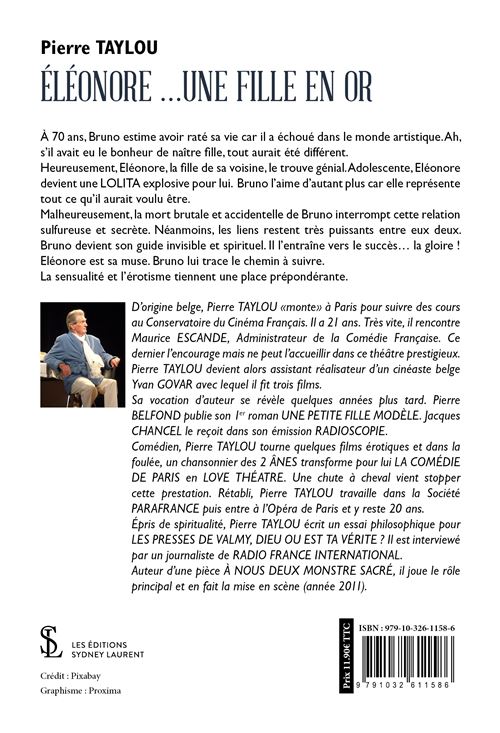
Howard Vernon, an alumn of several pre-Eurociné noirs produced by Lesoeur, is perhaps the actor most associated with the company thanks to his role as Franco's classic character Dr. Orloff.[34] American Jack Taylor was signed to a salaried contract by the elder Lesoeur during the 1960s Western boom, which enabled him to get a Spanish work permit, a rare commodity under Franco.[105] Lesoeur was also responsible for changing his early stage name Grek Martin to Jack Taylor.[106] Supporting players included Frenchman Olivier Mathot[107] and Spaniard Antonio Mayans,[108] both character actors who had brushes with the mainstream, and a few Belgian transplants like Roger Darton[57] and Pierre Taylou, who worked mostly as stage actors.[109][110] Among the company's erotic starlets were Evelyne Scott,[111] glamour model turned actress Alice Arno,[112] former adult film performer Nadine Pascal[113] and Monica Swinn (another Belgian who was brought to Eurociné by her boyfriend, underground film figure Jean-Pierre Bouyxou).[114]
Jesús Franco was the company's emblematic director. He was introduced to Marius Lesoeur—right as he was starting to do business as Eurociné—by Sergio Newman, the Spanish-based producer of Queen of the Tabarin Club.[115] While tempestuous, their on-and-off relationship spans every era of Eurociné, even after his death thanks to the Lesoeurs' collaboration to some posthumous projects.[116] Due to their tortuous production history, the number of films credited to the partnership has varied, but Franco biographer Alain Petit pegs it as 28.[117][118] Pierre Chevalier, a former director of popular comedies who revived his flagging career during Eurociné's sexploitation era, is the other director most often associated with Eurociné.[34][119] In addition to many Spanish co-producers, the Lesoeurs frequently used Belgian father and son Jean and Pierre Quérut as international co-production partners, often through the company Brux International Pictures.[15]
Alain Hardy was the Eurociné's longest tenured cinematographer.[15] Gérard Brissaud was another company regular working for both Franco and Chevalier,[63] although Franco biographer Stephen Thrower notes that the former sometimes used Brissaud's name as an alias to beef up the credits when photographing his own features.[109] Jazz composer Daniel J. White, a Frenchman of Scottish descent, had also started working with Lesoeur during his pre-Eurociné noir days.[120] About 80 percent of the company's posters were drawn by Ukrainian-born artist Constantin Belinsky, a fixture of the French B-movie industry.[121]
Pseudonyms and figureheads
Eurociné is also known for its frequent use of pseudonyms, whose ownership is often debated due to the patchwork nature of many of their films.[122] Marius Lesoeur started using the name A.L. Mariaux for some ancillary jobs in the late 40s,[79] and was still credited as such at industry events in his twilight years.[103] However, others such as Jesus Franco contributed to works credited to this name as well.[123] The pseudonym A.M. Frank started as an aggregation of Marius Lesoeur's first and middle name initials (Adolphe Marius) and Jesus Franco's anglicized name.[124] However it became a catch-all stage name as well, used on projects that did not involve Franco.[125][126] A fake biography was even conjured, which claimed that it stood for Anton Martin Frank, itself a German alias for an American novelist called Robert Warren.[127] H.L. Rostaine, who lent her name to some screenplays and contract signings, was Henriette Louise Rostaine, Marius' wife and Daniel's mother.[128] Although used on several Alain Payet films and frequently associated with him,[63][129] James Gartner was another company-wide alias.[130][122] Henri Bral de Boitselier was an administrative employee of Belgian partners Brux International whose name was used to satisfy some co-production requirements. According to director Gilbert Roussel, Lesoeur likely felt that his upper class name added cachet to the credits.[131]
Other regulars saw their names Americanized for similar reasons like Monika Swuine (Monica Swinn),[132] Claude Boisson (who was renamed Yul Sanders by the elder Lesoeur as he was bald),[133][134] Evelyne or Evelyn Scott (Evelyne Deher)[111] Peter Knight (Pierre Chevalier)[34] or Robert Foster (Antonio Mayans), not to be mistaken with American actor Robert Forster, who coincidentally also worked for Eurociné.[135]
Selected films produced
| Year | Title | Notes[A] |
|---|---|---|
Films BAP (Charles Battesti and Robert Péguy)
| ||
| 1935 | Monsieur Prosper | Short film |
| 1935 | Le Père La Cerise | Medium length film |
| 1936 | Jacques and Jacotte | Also known as Jacotte |
| 1937 | My Little Marquise | |
| 1937 | Monsieur Breloque Has Disappeared | |
| 1938 | Grandfather | |
| 1946 | Master Love | |
Eurociné (Marius Lesoeur and family)
| ||
| 1960 | Queen of the Tabarin Club | First collaboration between Marius Lesoeur and Jesus Franco[115] With Hispamer Films and Cifesa |
| 1961 | Interpol recherche... | With Urania Films |
| 1961 | Le Cave est piégé | With SOPADEC and Procinor |
| 1961 | The Awful Dr. Orloff | With Ydex and Hispamer Films |
| 1962 | Death Whistles the Blues | With Naga Films |
| 1962 | Zorro the Avenger | With Cooperativa Copercines |
| 1963 | Billy the Kid | With Tyris Film and Cooperativa Cinematográfica Carthago |
| 1964 | Tomb of the Pistolero | With Fenix-Films |
| 1963 | The Sadistic Baron von Klaus | With Cooperativa Cinematográfica Albatros |
| 1964 | The Shadow of Zorro | With Cooperativa Copercines and Produzioni Europee Associati |
| 1965 | Fall of the Mohicans | With Eguiluz Films and Ital Caribe Cinematografica |
| 1967 | Je suis une danseuse nue | With Lutétia Films Short by Daniel Lesoeur released in nudie compilations La Grande parade du nu (1969)[136] and Encore plus nu (1970)[137] |
| 1968 | Nathalie, l'amour s'éveille | |
| 1969 | Paris inconnu | Mondo documentary |
| 1970 | Nathalie après l'amour | With Cetelci |
| 1970 | Caroline mannequin | Re-released as Caroline mannequin nu with scenes from Paris inconnu, The Awful Dr. Orloff and the Eurociné-distributed Sword of Zorro, which differed depending on copies[138] |
| 1971 | Orloff and the Invisible Man | With Celia Films and Mezquiriz Producciones |
| 1972 | Red Hot Zorro | Also known as Zorro's Amorous Campaign Composite of the Eurociné-distributed Sword of Zorro and new footage by Gilbert Roussel With Brux International Pictures |
| 1973 | Pigalle carrefour des illusions | With Celia Films |
| 1973 | Avortement clandestin ! | With Brux International Pictures |
| 1973 | Tender and Perverse Emmanuelle | Also known as The Last Thrill With General Film |
| 1973 | Eugénie de Sade | With Prodif Établissements |
| 1973 | The Hot Nights of Linda | Also known as But Who Raped Linda? With Brux International Pictures and Parva Cinematografica |
| 1973 | Il torcinaso | With Exporama |
| 1973 | Kiss Me Killer | Remake of Death Sings the Blues With Parva Cinematografica |
| 1973 | Crimson, the Color of Blood | Re-released with erotic inserts as Le Viol ou l'enfer des X With Mezquiriz Producciones and Europrodis |
| 1973 | The Girls of the Golden Saloon | Composite of the Eurociné-distributed The Sign of the Coyote with re-dubbed parodic dialogue and new footage by Gilbert Roussel With C.A.C. and Brux International Pictures |
| 1973 | A Virgin Among the Living Dead | With Prodif Établissements and Brux Inter Films It is debated whether the timing of Eurociné's involvement makes it a producer or distributor only. The Lesoeurs did commission Jean Rollin to shoot new zombie scenes in 1981. |
| 1974 | House of Cruel Dolls | Also known as House of Lost Dolls and Police Magnum 84 Composite of scenes from the Eurociné-distributed Agente Sigma 3 – Missione Goldwather and original footage by Pierre Chevalier With C.R.C. Produzioni |
| 1974 | Convoy of Women | Composite of the Eurociné-distributed Hudson River Massacre and new footage by Pierre Chevalier With Julia Film |
| 1975 | Devil's Kiss | With Andros Films |
| 1975 | The Mark of Zorro | Re-release of Zorro the Avenger with new framing scenes by Alain Payet |
| 1975 | A Virgin for Saint-Tropez | Also known as Love in the Mirror With C.R.C. Produzioni |
| 1975 | Women Behind Bars | With Brux International Pictures |
| 1976 | Convoy of Girls | With Avia-Films Re-released in 1979 as East of Berlin |
| 1976 | Paris porno | With Avia-Films |
| 1975 | Midnight Party | With Brux Inter Films |
| 1975 | Female Vampire | Also released in a horror version known as Erotikill, and with hardcore scenes as Les Avaleuses With Les Films de Marc and Brux International Pictures |
| 1975 | Exorcism | Also released with pornographic scenes as Sexorcismes in 1975 Re-released with re-dubbed dialogue and new footage as The Sadist of Notre Dame in 1979[139] With Cetelsi (Exorcism) and Triton Cinematografica (The Sadist of Notre Dame) |
| 1978 | Shining Sex | With Brux International Film |
| 1977 | Helga, She-Wolf of Stilberg | With Les Films du Saphir |
| 1977 | Hitler's Last Train | Also known as Helltrain With Plata Films |
| 1977 | Elsa Fräulein SS | Also known as Fräulein Devil and Fräulein Kitty With Patrizia Cinematografica |
| 1977 | Golden Jail | Based on the canned film Razzia sur le plaisir (directed by Marius Lesoeur under Franco's guidance), re-edited with scenes from Pigalle carrefour des illusions, Paris porno, A Virgin for Saint-Tropez and Crimson Re-released with hardcore inserts as Surboums Pornos |
| 1978 | Nathalie: Escape from Hell | With Les Films du Saphir |
| 1978 | Viol, la grande peur | |
| 1979 | Black Gold | Also known as Black Gold Dossier and Sabotage With International Cine Holiday |
| 1979 | Jailhouse Wardress | Composite of Elite Films' Barbed Wire Dolls, ancillary footage from Elsa Fräulein SS and Hitler's Last Train, and new framing scenes by Alain Deruelle |
| 1980 | Mondo Cannibale | Also known as White Cannibal Queen With Magna Films, Sirus International Films |
| 1980 | Cannibal Terror | Second film added to the Mondo Cannibale sessions to take advantage of locations |
| 1980 | Devil Hunter | With Lisa Film and J.E. Films |
| 1980 | La Pension des surdoués | Composite of Les Hommes de joie and new footage by Olivier Mathot |
| 1981 | Zombie Lake | With J.E. Films |
| 1981 | La Maison Tellier | With Laro Films |
| 1981 | Oasis of the Lost Girls | Also known as Police Destination Oasis With J.E. Films |
| 1982 | Oasis of the Zombies | With Diasa Producciones Cinematograficas Released in Spain with re-shot footage as La Tumba de los muertos vivientes |
| 1982 | Wild Things | Recycles footage from The Hot Nights of Linda With Belfilm and Titanic Films |
| 1982 | Othello | With MB Diffusion Also known as Black Commando |
| 1983 | Revenge in the House of Usher | Also known as Neurosis With Elite Films (Spain) |
| 1983 | Diamonds of Kilimandjaro | With Elite Films (Spain) |
| 1984 | The Panther Squad | With Brux International Film, Greenwich International and R. Van Esbeeke European Film |
| 1985 | Sida, la peste del siglo XX | With Golden Films Internacional Unreleased |
| 1986 | Golden Temple Amazons | With Brux International Pictures |
| 1986 | Angel of Death: Commando Mengele | Rework of the aborted Jesús Franco project Gente del Rio, re-shot from the ground up by Marius Lesoeur and Andrea Bianchi |
| 1987 | Maniac Killer | |
| 1988 | Dark Mission: Evil Flowers | With Siodmak Producciones |
| 1987 | Countdown to Esmeralda Bay | With Lluria Films |
| 1989 | Night of the Eagles | Also known as Fall of the Eagles With Lluria Films |
| 2004 | El Rey | With Fundación Imagen Latina and Club de Tecnicas de Produccion Nominated – Goya Award for Best Spanish Language Foreign Film |
| 2013 | La última película de Jess Franco | Documentary feature film With Vanglabeke Films and Pellicules et essai |
| A Company information taken from the French Cinematography and Audiovisual Registry[140] |
Legacy
Eurociné and Lesoeur's sister companies were also honored with a retrospective during the 2000 Brussels International Fantastic Film Festival.[47] A feature-length documentary dedicated to the company entitled Eurociné, 33 Champs-Élysées, was released in 2013 in partnership with French TV channel Ciné+.[141] Director Yann Gonzalez has named Eurociné as an influence on the erotic scenes found in his early works.[142]
References
- ^ a b "Publications légales – Avis". La Loi. Paris. 26 February 1937. p. 2 – via newspapers.com (subscription required) .
- ^ a b c d "Eurociné". eurocine.net. Retrieved 2 April 2023.
- ^ a b c Bosséno & Dehée 2004, p. 491.
- ^ Guilhamou, Clément, ed. (1938). Le Tout-Cinéma – Annuaire Saison 1938–1939 (in French) (17th ed.). Paris. pp. 98, 501, 519, 580.
{{cite book}}: CS1 maint: location missing publisher (link) - ^ Assemblée générale de la société Eurociné (product catalogue) (in French), Paris: Eurociné, 5 May 1998 [5 February 1997]
- ^ "Monsieur Prosper (1935) Robert Péguy". cine-ressources.net (in French). Retrieved 2 April 2023.
- ^ X. (29 February 1936). "Le père la cerise (Comédie, Osso)". La Cinématographie française (in French). No. 904. Paris. p. 29.
- ^ a b P.H. (8 May 1936). "Jacotte – 'Une vraie petite fille française'". Le Figaro (in French). Paris. p. 5.
- ^ "Les Films J. Sefert présentent leur programme". L'Écran (in French). No. 1073. Paris: Syndicat français des directeurs de théâtres cinématographiques. 19 December 1936. pp. 16–17.
- ^ "Courrier des spectacles". La Vigie marocaine. Casablanca. 22 January 1938. p. 9.
- ^ Y.C. (7 May 1936). "Et maintenant... Qu'allez-vous faire ?". Ciné-comoedia. Paris. p. 6 – via newspapers.com (subscription required) .
- ^ "Communiqués officiels du comité d'organisation de l'industrie cinématografique" (PDF). Le Film (in French). No. 57. Paris. 23 January 1943. p. 5.
- ^ "Interview M. Robert Péguy" (1946). Commission de Recherche Historique. Paris: Cinémathèque française.
- ^ Bier 2013, Event occurs at 12:50.
- ^ a b c d e Grainger 2015, pp. 408–409, Eurociné – The Business of Euro-Bis.
- ^ a b "Eurociné: Histoire". eurocine.net (in French). Archived from the original on 19 September 2024.
- ^ Bethman, Andreas (1999). "Jess Franco in Zusammenarbeit mit Eurociné". Jess Franco Chronicles (in German). Hille: MPW. pp. 143–148. ISBN 3931608263.
- ^ Bier 2013, Event occurs at 12:50.
- ^ Lesoeur, Marius c/o SOPADEC. "Distribution" (30 November 1959). Registres du cinéma et de l’audiovisuel, File: Rue de la peur, ID: 26.INS.33670. Paris: Centre National de la Cinématographie.
- ^ Lesoeur, Marius. "Cession de droits" (2 February 1960). Registres du cinéma et de l’audiovisuel, File: Rue de la peur, ID: 27.INS.34178. Paris: Centre National de la Cinématographie.
- ^ "Seigneur André Paul". deportes-politiques-auschwitz.fr (in French). 2 February 2025 [14 June 2010]. Retrieved 1 July 2025.
- ^ Eurociné; Sopadec; Procinor. "Coproduction" (27 December 1960). Registres du cinéma et de l’audiovisuel, File: Le Cave est piégé, ID: 33.INS.37086. Paris: Centre National de la Cinématographie.
- ^ Eurocinéac. "Cession de droits" (16 September 1965). Registres du cinéma et de l’audiovisuel, File: Les Trois Épées de Zorro, ID: 64.INS.53329. Paris: Centre National de la Cinématographie.
- ^ Eurocinéac. "Cession de droits" (12 March 1963). Registres du cinéma et de l’audiovisuel, File: L'Ombre de Zorro, ID: 47.INS.44409. Paris: Centre National de la Cinématographie.
- ^ Eurocineac. "Délégation de recettes" (28 January 1966). Registres du cinéma et de l’audiovisuel, File: Agent 077 Opération sexy, ID: 67.INS.54958. Paris: Centre National de la Cinématographie.
- ^ Grainger 2015, p. 88.
- ^ Bier 2013, Event occurs at 24:10.
- ^ Grainger 2015, p. 87.
- ^ D. Lesoeur 2023, Event occurs at 13:42.
- ^ Mendíbil, Álex (host); Lesoeur, Daniel; Mayans, Antonio (guests) (7 November 2024) [31 October 2024]. Sala:B – Terror en Eurociné (film panel) (in Spanish). Madrid: Filmoteca Española. Retrieved 27 March 2024.
- ^ García-Ergúín Maza, Marcos (8 July 2016). La revolución en el cine western europeo. Perspectiva de un fenómeno cinematográfico (1965–1975) (in Spanish). GRIN Verlag. p. 12. ISBN 9783668256071.
- ^ Bier 2013, Event occurs at 24:49.
- ^ a b Petit 2015, p. 56.
- ^ a b c d e f Bier, Christophe (as Herbert Poishic) (May 1999). "Eurociné : la série Z 'à la française'". Mad Movies (in French). No. 119. Paris: Jean-Pierre Putters. pp. 46–49. ISSN 0338-6791.
- ^ Pinkerton, Nick (10 June 2022). "Keep Their Heads Ringin'". metrograph.com. Archived from the original on 27 March 2023.
- ^ Higueras, Rubén, ed. (February 2014). Cine fantástico y de terror español : De los origenes a la edad de oro (1921–83) (in Spanish). Spain: T&B Editores. p. 121. ISBN 978-8494412769.
- ^ Franco 2004, p. 246–251.
- ^ Tohill & Tombs 1994, p. 113–114.
- ^ D. Lesoeur 1999, Event occurs at 4:45.
- ^ D. Lesoeur 2023, Event occurs at 24:00.
- ^ D. Lesoeur 1999, Event occurs at 9:09.
- ^ D. Lesoeur 2023, Event occurs at 4:36.
- ^ D. Lesoeur 2023, Event occurs at 22:33.
- ^ "La Gazette du Club des Monstres Numéro 6 : Eurociné – Nazisploitation". clubdesmonstres.com (in French). 2008. Retrieved 18 October 2025.
- ^ Eurociné 33 Champs-Elysées 2013, 22:37, 52:52.
- ^ a b Dumez, Virgile (13 March 2022). "Les nuits brûlantes de Linda… : la critique et le test blu-ray (1975)". cinedweller.com (in French). Retrieved 24 February 2025.
- ^ a b c "Hommage to Eurociné" (PDF). Nova (in French and Dutch). No. 32. Brussels. March 2000. p. 5.
- ^ a b Brady, Dan (May 1983). "Entrevue avec une morte-vivante Françoise Blanchard". Starfix (in French). No. 5. Paris: Starfix Editions. pp. 12–13. ISSN 0756-0559.
- ^ a b Thrower 2018, p. 34.
- ^ D. Lesoeur 2023, Event occurs at 23:20.
- ^ Bier 2013, Event occurs at 39:26.
- ^ a b Franco 2004, p. 224.
- ^ a b Granger, Damien (host) (October 2004). Interview de Jess Franco. Les Maîtresses du Dr. Jekyll (DVD featurette) (in French). Paris: Mad Movies. Event occurs at 11:45. UPC 3530941021330.
- ^ Tohill & Tombs 1994, p. 251.
- ^ D. Lesoeur 1999, Event occurs at 17:41.
- ^ Rauger, Jean-François (2013), Eurociné (event flyer) (in French), Paris: Cinémathèque française, retrieved 30 December 2025
- ^ a b Bier, Christophe (1 April 2013). "Hommage à Roger Darton". lecoinducinephage.com (in French). Retrieved 29 May 2023.
- ^ a b Lahaye, Nicolas (2017). "Le film d'exploitation, un film-martyr" (PDF). Kinétraces (in French). No. 2. Paris: Association Kinétraces; Université Sorbonne Nouvelle. pp. 87–108.
- ^ a b Franco 2004, p. 224–225.
- ^ a b Granger, Damien (host) (February 2006). Interview de Jess Franco. Une Vierge chez les morts-vivants (DVD featurette) (in French). Paris: Mad Movies. Event occurs at 15:02. UPC 3530941020647.
- ^ Meunier, Patrick (October 1984). "Videographie : Alain Payet". Blue Video Films (in French). No. 2. Paris. pp. 4–5.
- ^ Deruelle, Alain (guest) (2015). The Way of All Flesh (Blu-ray featurette). London: Severin Films. UPC 663390000649.
- ^ a b c Charles, Pierre (July–September 1982). "Le monde fou, fou, fou de Jesus Franco". Ciné Zine Zone (in French). No. 15. Saint-Maur. pp. 11–12. ISSN 0759-1357.
- ^ Hood & Fukuda 2000, p. 34.
- ^ Bier, Christophe; Lesoeur, Daniel (guests); Rauger, Jean-François (host) (10 April 2013) [22 March 2013]. Eurociné @ la Cinemathèque Française – Débat partie 1 (panel talk) (in French). 1kult. Retrieved 27 March 2024.
- ^ "Eurociné". macabre.net (in French). Archived from the original on 4 April 2008.
- ^ Toullec, Marc (May 2002). "Dossier 30 ans : Allons enfants de la tripaille". Mad Movies (in French). No. 142. Paris: Jean-Pierre Putters. p. 71. ISSN 0338-6791.
- ^ Blumenstock, Peter, ed. (1997). Virgins & Vampires: Jean Rollin. Crippled Publishing. p. 150. ISBN 3980582000.
- ^ D. Lesoeur 2023, Event occurs at 34:22.
- ^ "AMIP from the buying side" (PDF). Broadcasting. Vol. 105, no. 20. Washington: Broadcasting Publications. 14 November 1983. pp. 37–38. ISSN 0007-2028.
- ^ a b Clark, Ted (16 November 1983). "A-MIP Sales Results Generate Bouquets, Brickbats For Chevry Following Market's U.S. Preem". Variety. Vol. 313, no. 3. New York. p. 35, 54.
- ^ Greenberg, James (8 May 1985). "Empire Ent. Bows Second Video Label; Vestron Distributes". Variety. Vol. 319, no. 2. New York. p. 128.
- ^ "Empire Bows Offshore Video at Film Market". Variety. Vol. 318, no. 6. New York. 6 March 1985. p. 126–326.
- ^ D. Lesoeur 2023, Event occurs at 34:22.
- ^ D. Lesoeur 2023, Event occurs at 35:07.
- ^ Granger, Damien (host) (2007). Interview de Jess Franco. L'Abîme des morts-vivants (DVD featurette) (in French). Paris: Mad Movies. Event occurs at 7:06. UPC 3530941014363.
- ^ D. Lesoeur 2023, Event occurs at 35:38.
- ^ a b Lacan, Jean-François (17 May 1985). "Cannes, trente-huitième – Bloc-notes". Le Monde (in French). Paris. p. 17.
- ^ a b Petit 2015, p. 247.
- ^ Bier 2013, Event occurs at 1:15:25.
- ^ Toullec, Marc (July 1996). "Vidéo rayon inédits – Le retour du petit Jésus : à propos de La Chute des aigles, Esmeralda Bay et Dark Mission". Impact (in French). No. 63. Paris: Jean-Pierre Putters. p. 47. ISSN 0765-7099.
- ^ "1988–89 Film Production". Variety. Vol. 335, no. 2. New York: Cahners Publishing. 3 May 1989. p. 93.
- ^ Kuklinski, Gerard (2021). "Cinema Mondiale: Fall of the Eagles". italo-cinema.de (in German). Retrieved 25 September 2025.
- ^ Bier 2013, Event occurs at 27:10.
- ^ Petit 2015, p. 54, 248, 739.
- ^ Les Classiques du Cinéma Bis (19 May 2022). "Notre ami Daniel Lesoeur, fidèle à son stand au Marché du Film du Festival de Cannes !". facebook.com (in French). Retrieved 2 April 2023.
- ^ "What's selling at NATPE". Variety. 6 January 1997. Retrieved 18 December 2025.
- ^ "NATPE 1997" (PDF). Broadcasting & Cable. Vol. 127, no. 2. Washington: Cahners Publishing. 13 January 1997. p. 64. ISSN 1068-6827.
- ^ a b c Hood & Fukuda 2000, p. 25.
- ^ "Marius Lesoeur". notrecinema.com (in French). Retrieved 25 September 2025.
- ^ Frater, Patrick (3 November 2004). "Eurocine takes on international sales rights to El Rey". Screen Daily. Retrieved 29 May 2023.
- ^ D. Lesoeur 2023, Event occurs at 50:38.
- ^ Rolinski, Sabine, ed. (2016). "Eurociné – Daniel Lesoeur". European Umbrella (American Film Market catalogue). Hamburg: European Film Promotion. p. 17.
- ^ "Les collections films". Rapport d'activité 2006 (PDF) (Report) (in French). Paris: Cinémathèque française. p. 7. Retrieved 30 December 2025.
- ^ "Les enrichissements". Rapport d'activité 2008 (PDF) (Report) (in French). Paris: Cinémathèque française. p. 30. Retrieved 30 December 2025.
- ^ "Établissements de l'entreprise SOC Eurociné". pappers.fr (in French). Retrieved 25 September 2025.
- ^ Bier 2013, Event occurs at 1:17:15.
- ^ Carrón, C. David (2 April 2013). "Jess Franco, la clase A de la serie B". La Razón (in Spanish). Retrieved 25 September 2025.
- ^ "Informations juridiques de SOC Eurociné". pappers.fr (in French). Retrieved 25 September 2025.
- ^ "Eurociné". annuaire-entreprises.data.gouv.fr (in French). Retrieved 18 December 2025.
- ^ "The Eurocine Collection: Vol. 1 Blu-ray (U.S.) – Overview". blu-ray.com. Retrieved 28 April 2024.
- ^ Bier, Christophe; Lesoeur, Daniel (guests); Rauger, Jean-François (host) (10 April 2013) [22 March 2013]. Eurociné @ la Cinemathèque Française – Débat partie 3 (panel talk) (in French). 1kult. Retrieved 27 March 2024.
- ^ a b "MIPCOM Vendors & Products : A – Ch". Variety. 26 September 2000. Retrieved 10 January 2026.
- ^ Bier 2013, Event occurs at 1:00:41.
- ^ D. Lesoeur 2023, Event occurs at 14:27.
- ^ Esbilla, Adrián (15 January 2010). "Artistas y modelos: Carlos Aguilar, arqueólogo del cine imposible Vol. II". Esbilla cinematográfica popular (in Spanish). Retrieved 25 September 2025.
- ^ Dumez, Virgile. "Olivier Mathot". cinedweller.com (in French). Retrieved 29 May 2023.
- ^ D. Lesoeur 2023, Event occurs at 43:26.
- ^ a b Thrower 2018, p. 32–33.
- ^ Taylou, Pierre (2018). Éléonore ... une fille en or. Paris: Éditions Sydney Laurent. Back cover. ISBN 9791032611586.
- ^ a b Dumez, Virgile. "Evelyn Scott". cinedweller.com (in French). Retrieved 18 October 2025.
- ^ Dumez, Virgile. "Alice Arno". cinedweller.com (in French). Retrieved 29 May 2023.
- ^ Dumez, Virgile. "Nadine Pascal". cinedweller.com (in French). Retrieved 29 May 2023.
- ^ D. Lesoeur 2023, Event occurs at 16:45.
- ^ a b Franco 2004, p. 222–223.
- ^ "Queridos montruos (My Dear Monsters)". Catalogo ICAA. Madrid: Ministerio de Educación, Cultura y Deporte.
- ^ Petit 2015, p. 55.
- ^ Bier 2013, Event occurs at 26:20.
- ^ Bosséno & Dehée 2004, p. 189.
- ^ Petit 2015, p. 196.
- ^ Eurociné 33 Champs-Elysées 2013, 52:45.
- ^ a b Thrower 2018, p. 493.
- ^ Lucas, Thomas (1990). "How to read a Franco film". Video Watchdog. No. 1. Cincinnati: Tim and Donna Lucas. pp. 18–19. ISSN 1070-9991.
- ^ Lucas, Tim (September 1992). The Video Watchdog Book. Cincinnati. p. 96. ISBN 9780963375605.
{{cite book}}: CS1 maint: location missing publisher (link) - ^ Balbo, Lucas; Blumenstock, Peter; Kessler, Christian; Lucas, Tim (May 1993). Obsession – The Films of Jess Franco. Berlin: Frank Trebbin. p. 147. ISBN 392923405X.
- ^ D. Lesoeur 2023, Event occurs at 29:50.
- ^ "Anton Martin Frank". Cinéfiches (in French). Retrieved 18 October 2025.
- ^ "Lesoeur Marius". lesgensducinema.com (in French). Retrieved 25 September 2025.
- ^ Lemaire & Bier 2013, Event occurs at 53:21.
- ^ Petit 2015, p. 75.
- ^ Martinet, P.; Rig, J. (May 1983). "Gilbert Roussel: 'La porniflette c'est un peu comme le loto'". Ciné Eros Star (in French). No. 13. Paris. pp. 3–9.
- ^ "Comédienne". monica-swinn.fr (in French). Archived from the original on 29 June 2022.
- ^ Petit 2015, p. 324.
- ^ Bier 2013, Event occurs at 46:30.
- ^ D. Lesoeur 2023, Event occurs at 43:26.
- ^ Jacquot, Yves; Sorin, Pascal (eds.). "La Grande parade du nu". encyclocine.com (in French). Retrieved 16 October 2025.
- ^ "Encore plus nu". senscritique.com (in French). Retrieved 10 January 2026.
- ^ "Caroline, mannequin nu". senscritique.com (in French). Retrieved 10 January 2025.
- ^ Thrower, Stephen (guest) (2018). Differences between The Sadist of Notre Dame (1979) and Jess Franco’s Exorcism (1975) (Blu-ray featurette). Severin Films. Retrieved 27 March 2024.
- ^ Registre public du cinéma et de l’audiovisuel. Paris: Centre national du cinéma et de l'image animée.
- ^ "Eurociné 33 Champs-Élysées". senscritique.com (in French). Retrieved 18 October 2025.
- ^ Azoury, Philippe (12 November 2013). "L'incroyable casting des Rencontres d'Après Minuit de Yann Gonzalez". Le Nouvel Obs (in French). Retrieved 18 October 2025.

Works Cited
- Tohill, Cathal; Tombs, Pete (1995) [1994]. Immoral Tales: European Sex & Horror Movies, 1956–1984. New York: St. Martin's Griffin. ISBN 978-0312135195.
- "Strange Behavior: Cult Films of Eurociné Studios". Eurotika!. Episode 8. Bridport: Boum Productions. 1999. Channel 4.
- Hood, Donald E.; Fukuda, Curtis (September 2000). "Eurociné: The Best Little Horror House in France". Video Watchdog. No. 63. Cincinnati: Tim & Donna Lucas. pp. 24–37. ISSN 1070-9991.
- Bosséno, Christian-Marc; Dehée, Yannick, eds. (October 2004). Dictionnaire du cinéma populaire français des origines à nos jours (in French). Paris: Nouveau Monde éditions. ISBN 2847360824.
- Franco, Jesús (2004). Memorias del tio Jess (in Spanish). Madrid: Aguilar. ISBN 9788403095007.
- Bier, Christophe (director, host) (2013). Eurociné 33 Champs-Elysées (feature documentary) (in French and English). Paris; Saint-Michel-sur-Orge: Esperanza Productions; Ciné+; Cinaps TV.
- Bier, Christophe (guest); Fasulo, Fausto; Lemaire, Christophe (hosts) (2013). "Eurociné : les rois du bis". Le Bistro du bis (talk show). Episode 37 (in French). Paris: Wild Bunch. FilmoTV. Retrieved 21 December 2025.
- Petit, Alain (2015). Jess Franco ou les prospérités du bis (in French and English). Alignan-du-Vent: Artus Films. ISBN 9782954843537.
- Thrower, Stephen; Grainger, Julian (2015). Murderous Passions: The Delirious Cinema of Jesús Franco. Vol. 1: 1959–1974. London: Strange Attractor Press. ISBN 9781907222313.
- Thrower, Stephen; Grainger, Julian (2018). Flowers of Perversion: The Delirious Cinema of Jesús Franco. Vol. 2: 1975–2013. London: Strange Attractor Press. ISBN 9781907222603.
- Lesoeur, Daniel (guest) (10 January 2023). Interview Daniel Lesœur, directeur général et producteur chez Eurociné (video interview) (in French). Le Mans: Association Bis Not Dead.
Bibliography
- Bier, Christophe; Aknin, Laurent; Balbo, Lucas (1999). Cinéma culte européen : Eurociné (in French). Paris: Christophe Bier. ISBN 2913577008.
External links
- Official website (in French, Spanish and English)