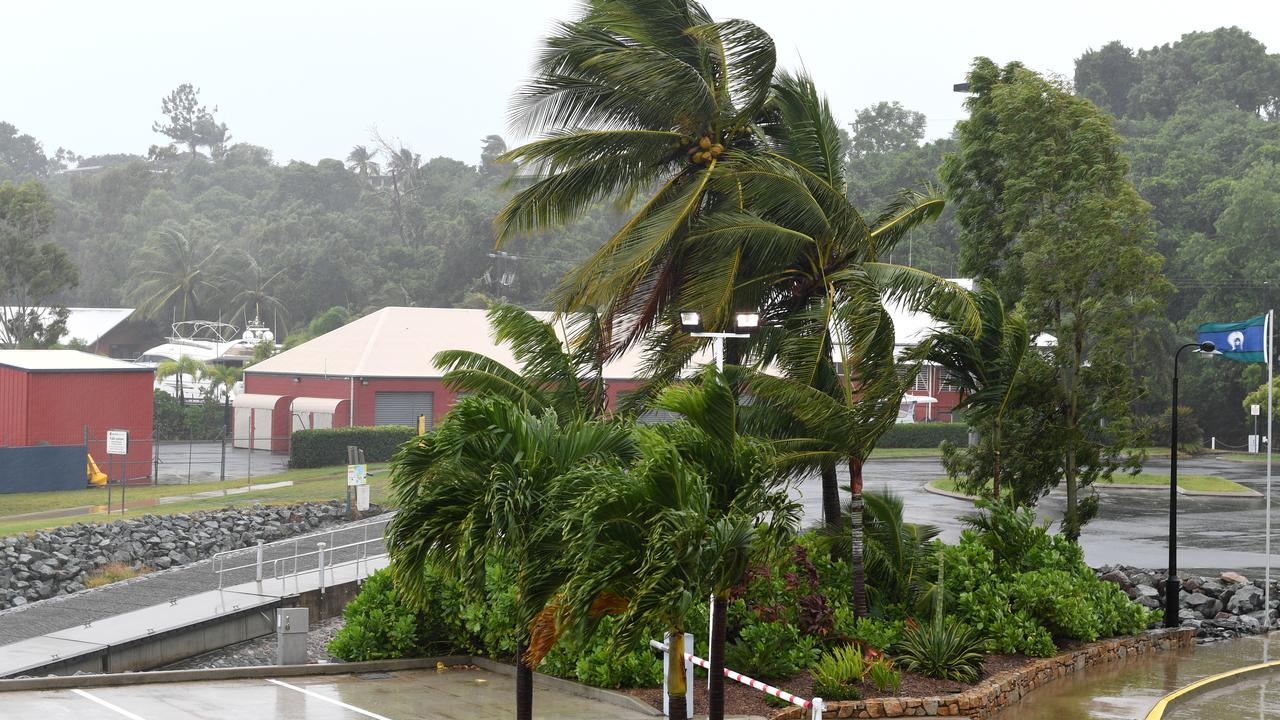
2025–26 Australian region cyclone season
| 2025–26 Australian region cyclone season | |
|---|---|
Season summary map | |
| Seasonal boundaries | |
| First system formed | 15 July 2025 |
| Last system dissipated | Season ongoing |
| Strongest storm | |
| Name | Narelle |
| • Maximum winds | 220 km/h (140 mph) (10-minute sustained) |
| • Lowest pressure | 925 hPa (mbar) |
| Seasonal statistics | |
| Tropical lows | 22, 1 unofficial |
| Tropical cyclones | 10, 1 unofficial |
| Severe tropical cyclones | 6 |
| Total fatalities | 1 |
| Total damage | > $594,000 (2025 USD) |
| Related articles | |
The 2025–26 Australian region cyclone season is an ongoing weather event within the southern hemisphere. The season officially started on 1 November 2025 and will end on 30 April 2026, however, a tropical cyclone could form at any time between 1 July 2025 and 30 June 2026 and would count towards the season total. During the season, tropical cyclones will be officially monitored by one of the three tropical cyclone warning centres (TCWCs) for the region which are operated by the Australian Bureau of Meteorology, National Weather Service of Papua New Guinea and the Indonesian Agency for Meteorology, Climatology and Geophysics. The United States Joint Typhoon Warning Center (JTWC) and other national meteorological services including Météo-France and the Fiji Meteorological Service will also monitor the basin during the season.
The season began on 15 July 2025, with the formation of Tropical Low 01. In November, the first named storm of the season, Fina, caused moderate wind damage and power outages in Darwin, before striking the Kimberley Coast as a category 3 tropical cyclone. In December, Cyclone Hayley struck the Dampier Peninsula, causing roof damage to homes in several communities. The next month, Cyclone Luana struck the same region, bringing similar impacts while Cyclone Koji caused severe flooding across northern Queensland. In February, Cyclone Mitchell brought significant impacts to agriculture in Western Australia.
Season summary
Pre–season/early season activity
The season began with a tropical low in TCWC Jakarta's area of responsibility on 15 July. It was the first July tropical low in the Australian region since 2022. It moved into the South-West Indian Ocean a day later. The first tropical cyclone of the season, Fina, formed in the Timor Sea on 18 November.[1] Fina quickly intensified to a Category 4 peak before landfall on the western part of the Northern Territory. This was followed by Bakung, which also became a Category 4 Severe Tropical Cyclone on 14 December before dissipating, looping around in the northwestern part of the basin, away from land. After that, Grant developed, and slowly intensified before leaving the basin on 27 December. The same day, Hayley developed. It struck Kimberley a few days later, weakening from its Category 4 peak. To continue the quick formation of storms, Iggy was a short-lived Category 1 system well away from land in early January, before Jenna also curved westward a few days later, as a Category 3. The Australian region has seen an unusually active start to the season, with six named systems forming or entering Australia's western region by 6 January, making it the most active in the region to said point since the 1973-74 season.[2]
Peak season activity
Continuing with a very active streak, Koji was a weaker system that impacted Queensland in mid–January. After a short break, Luana formed and struck near Broome on 25 January, before continuing inland via a brown ocean effect. In early February, Mitchell developed and paralleled the Pilbara coast before making landfall on 9 February. After that, a much longer break between named storms occurred, before Narelle developed in the northern Coral Sea on 15 March.
Oceanic conditions
The Indian Ocean Dipole reached -1.94°C in the week ending 2 November, which was the lowest weekly ever recorded in records to 2008.[3] A negative IOD influences tropical cyclone development in the Indian Ocean, as it leads to warmer water near Australia.[4]
Systems
Tropical Low 01
| Tropical low (BMKG) | |
| Duration | 15 July – 16 July (Exited basin) |
|---|---|
| Peak intensity | 55 km/h (35 mph) (10-min); 1003 hPa (mbar) |
On 15 July, a low-pressure area that had developed out of an equatorial trough which interacted with the Madden-Julian Oscillation gained better characteristics, thus it was noted as the first tropical low, in the area of responsibility of TCWC Jakarta.[5] It was the first July tropical low in the Australian region since 2022. As the system slowly intensified in an area of warm SSTs offset by high wind shear, a TCFA was issued by the JTWC, shortly before the system exited into the South-West Indian Ocean basin on 16 July, where it was designated Tropical Depression 01 by MFR.
Severe Tropical Cyclone Fina
| Category 4 severe tropical cyclone (Australian scale) | |
| Category 4 tropical cyclone (SSHWS) | |
| Duration | 15 November – 24 November |
|---|---|
| Peak intensity | 195 km/h (120 mph) (10-min); 938 hPa (mbar) |
On 15 November, the Bureau of Meteorology started tracking a low-pressure system near the Timor Sea and designated it as 02U.[6] On 18 November, the system developed stronger convection and thunderstorm activity.[7] It intensified into Tropical Cyclone Fina on the same day and remained a compact system.[8] On 19 November, Fina intensified into a Category 2 cyclone amid warm sea surface temperatures.[9] A cyclone warning was issued from the Coburg Peninsula to Warruwi, and a cyclone watch was issued for the Tiwi Islands, Maningrida, and Milingimbi Island.[10] Curved banding was visible early on 20 November as Fina began moving south towards the Top End.[11] Fina weakened later that day as it continued moving south due to wind shear, and its convection decreased.[12] It slightly re-intensified that evening as it moved towards Darwin.[13] Fina made landfall on the Coburg Peninsula on 21 November and further intensified as it moved into the Van Diemen Gulf.[14][15] Early on 22 November, Fina strengthened into a Category 3 severe tropical cyclone.[16] Fina made its second landfall on Melville Island that morning, with an eye being visible on satellite imagery.[17] The cyclone slightly weakened but maintained category 3 intensity that afternoon as it emerged into the Timor Sea, and its eye became less defined following the interaction with land.[18] On 23 November, Fina strengthened into a category 4 cyclone, with a clearly visible eyewall persisting on radar imagery and a minimum central pressure of 952 hPa (28.1 inHg).[19] On 24 November, Fina then weakened to category 3 intensity and made landfall near the mouth of the Berkeley River along the northeastern coast of Kimberley. Once inland, Fina rapidly weakened to a tropical low and dissipated on 26 November.[20]
On 19 November, a cyclone warning was issued from the Cobourg Peninsula to Warruwi, and a cyclone watch was issued for the Tiwi Islands, Maningrida, and Milingimbi Island.[21] On 1:09 am ACST on Friday 21 November 2025, the Northern Territory Emergency Service issued cyclone warnings for part of the Northern Territory.[22] The Darwin Airport closed at 9 AM ACST in preparation for the cyclone, and shelves were empty in some stores across Darwin as major supermarkets were advised to close across the region. The local hospital, Royal Darwin Hospital, issued a code brown to streamline emergency management systems.[23] The strongest wind gusts were recorded were around 109 km/h at Crocker Island Airport on 21 November, and 107 km/h in 22 November. The most notable 24-hour rainfall recorded from Fina was at Middle Point, near Darwin, which would record 430 millilitres in the 24 hours to the morning of 23 November.[20] Across 22 and 23 November, the system caused several significant power outages, including large parts of Darwin, Palmerston, and the Tiwi Islands, affecting at least 19,500 customers.[24][25] Roads were flooded, and properties were damaged.[26] Hundreds of trees fell across Darwin, damaging cars and homes, while parts of the Royal Darwin Hospital's external wall collapsed.[27][28] Tiwi college sustained an estimated AU$600,000-700,000 (US$424,000-494,000) worth of damage from Fina.[29]
Severe Tropical Cyclone Bakung
| Category 4 severe tropical cyclone (Australian scale) | |
| Category 1 tropical cyclone (SSHWS) | |
| Duration | 10 December – 18 December |
|---|---|
| Peak intensity | 165 km/h (105 mph) (10-min); 957 hPa (mbar) |
On 10 December, a low pressure area formed to the south of the city of Jakarta. Although the system was outside its area of responsibility at the time, the Bureau of Meteorology designated it Tropical Low 05U. 05U then began moving southwest, and began to consolidate and wrap deep convection near its centre, and was named Bakung by TCWC Jakarta on 12 December.[30] The cyclone developed rapidly in an environment of low wind shear, reaching its peak intensity as a category 4 on 14 December, and had moved into the Australian area of responsibility. High wind shear led to a weakening of the system during 15–16 December, before easing and allowing Bakung to intensify to a category 3 early 17 December. The wind shear then rapidly increased, weakening the system to a tropical low before dissipating on 18 December.[31]
Tropical Cyclone Grant
| Category 2 tropical cyclone (Australian scale) | |
| Tropical storm (SSHWS) | |
| Duration | 15 December – 27 December (Exited basin) |
|---|---|
| Peak intensity | 100 km/h (65 mph) (10-min); 986 hPa (mbar) |
On 16 December, a tropical disturbance, designated as Tropical Low 03U by the Bureau of Meteorology (BoM), formed south of Indonesia and began to move west.[32] On 18 December, the Joint Typhoon Warning Center (JTWC) initiated advisories on the system, designating it as Tropical Cyclone 09S, noting that westerly wind shear was causing convection within the system to displace to the west.[33][34] On 22 December, the JTWC that the system began to slow its forward motion speed due to a switch in a steering flow among a split subtropical ridge.[35] The following day, the BoM upgraded the system to a category 1 tropical cyclone on the Australian scale and was assigned the name Grant, with the JTWC noting that convection within the system was improving due to a decrease in wind shear.[36] However, later that day, the JTWC noted an increase in northerly wind shear and a decrease in convection and the BoM downgraded Grant to a tropical low early the next day.[37][32] The following day, the BoM re-upgraded Grant to a category 1 tropical cyclone, with the JTWC noting an increase in convective banding and the cooling of the cloud tops within the system.[32][38] Grant continued to strengthen, with the BoM upgrading the cyclone to category 2 intensity the next day before entering La Reunion's area of responsibility on 27 December.[32]
Grant brought heavy rainfall and gale-force winds while passing close to the Cocos (Keeling) Islands.[32][39] However, minimal damage was reported.[32]
Severe Tropical Cyclone Hayley
| Category 4 severe tropical cyclone (Australian scale) | |
| Category 2 tropical cyclone (SSHWS) | |
| Duration | 27 December – 30 December |
|---|---|
| Peak intensity | 165 km/h (105 mph) (10-min); 952 hPa (mbar) |
On 27 December, a tropical low, designated as Tropical Low 08U by the Bureau of Meteorology (BoM), formed 700 kilometres (430 mi) north-northeast of Broome. The low began moving south and intensify.[40] The following day, the Joint Typhoon Warning Center (JTWC) initiated advisories on the system and designated it as Tropical Cyclone 10S. The JTWC observed that convective banding was wrapping around the centre.[41] Later that same day, the BoM to upgraded it to a category 1 tropical cyclone on the Australian scale and assigned it the name Hayley. Shortly after, it began a period of rapid intensification, with the JTWC observing convection developing in the southwestern quadrant of the storm, along with an eye-like feature beginning to appear on satellite imagery.[42][43] The BoM then upgraded Hayley to category 4 strength late on 29 December.[44][40] Early the next day, Hayley weakened slightly to category 3 strength and turned east-southeast toward the Dampier Peninsula. The following day, Hayley made landfall near the communities of Lombadina and Djarindjin. After crossing King Sound, Hayley moved inland over Western Australia once again and began to weaken, with the JTWC observing that land interaction was beginning to impinge on the centre of circulation within the cyclone.[40][45] Hayley then weakened below tropical cyclone strength late on 30 December and dissipated early the next day.[40]
Portions of Western Australia received at least 300 millimetres (12 in) of rain fell in a 48 hour period, the equivalent to two to three months worth of rainfall for the region. The deluge led several rivers overflowing their banks. Flooding damaged several highways, isolating remote communities.[46] Wind gusts up to 158 kilometres per hour (98 mph) were reported in the Lombadina community.[47] North of Broome, strong winds tore off the roofs of two homes. A basketball court sustained severe damage from the storm. Water leaked through the roofs of several homes. A tree fell on a parked car in One Arm Point. [48] Another fallen tree damaged the roof of a church in Djarindjin.[49] Several communities were left without power and nine people fled to shelters.[50] A bridge was temporarily closed after a tree fell on it. After the storm, seventeen State Emergency Service volunteers were mobilized to assist with recovery efforts.[51]
Tropical Cyclone Iggy
| Category 1 tropical cyclone (Australian scale) | |
| Tropical storm (SSHWS) | |
| Duration | 31 December – 1 January |
|---|---|
| Peak intensity | 75 km/h (45 mph) (10-min); 997 hPa (mbar) |
On 30 December 2025, a tropical low began to develop southwest of Sumatra, assisted by increasing westerly winds. The Bureau of Meteorology (BoM) designated the system as Tropical Low 10U. The low quickly began to move southeast and passed Christmas Island to the east on 31 December.[52] Later that day, the Joint Typhoon Warning Center (JTWC) initiated advisories on the system, designating it as Tropical Cyclone 11S.[53] Convection within the storm began to improve in its northern side as a result of it moving into a more favorable environment with warmer sea surface temperatures and lower vertical wind shear.[54] Early the next day, the BoM determined that the low intensified into a category 1 tropical cyclone on the Australian scale and assigned the name Iggy. Iggy then weakened 18 hours later to a tropical low, with gales in the system confining to the eastern side. On 2 January, Iggy turned west and all gales within the system collapsed. Iggy then dissipated over the Indian Ocean shortly after.[52]
While closely passing to the east of Christmas Island, the storm brought 151.2 millimetres (5.95 in) of rain to the territory.[52]
Severe Tropical Cyclone Jenna
| Category 4 severe tropical cyclone (Australian scale) | |
| Category 2 tropical cyclone (SSHWS) | |
| Duration | 3 January – 7 January (Exited basin) |
|---|---|
| Peak intensity | 165 km/h (105 mph) (10-min); 967 hPa (mbar) |
On 3 January, a tropical low, designated as Tropical Low 11U by the Bureau of Meteorology (BoM), formed from a burst of westerly winds located to the northwest of the Cocos (Keeling) Islands. The low began to move quickly to the east and turned south the following day.[55] Later that same day, the Joint Typhoon Warning Center (JTWC) initiated advisories on the system and designated it as Tropical Cyclone 12S.[56] The JTWC noted that the cyclone was gradually beginning to organize with deep convection developing in the northern and western portions of the storm with its cloud tops beginning to cool.[56][57] Early the next day, the BoM upgraded the low to a category 1 tropical cyclone on the Australian scale and assigned the name Jenna while the cyclone passed east of the Cocos (Keeling) Islands. Jenna then turned south-southwest, beginning to strengthen as a result of moving into a more favourable environment for intensification.[55] The next day, the BoM upgraded Jenna to a category 4 tropical cyclone on the Australian scale. Shortly after, Jenna began to rapidly weaken.[55] The following day, the JWTC noted the satellite presentation of the cyclone was beginning to degrade, with increasing easterly wind shear causing convection in the system to displace south of its centre.[58][59] Westerly wind shear caused all convection within the system to displace southeast of its centre and the BoM downgraded the cyclone to a tropical low early the next day.[60][55] The low then turned west and exited the basin.[55]
Jenna brought 70.2 millimetres (2.76 in) of rain and wind gusts up to 94 kilometres per hour (58 mph) to the Cocos (Keeling) Islands.[55] Residents reported minor flooding and downed trees in the territory.[61]
Tropical Cyclone Koji
| Category 2 tropical cyclone (Australian scale) | |
| Tropical storm (SSHWS) | |
| Duration | 7 January – 10 January |
|---|---|
| Peak intensity | 100 km/h (65 mph) (10-min); 989 hPa (mbar) |
On 7 January, a broad monsoon depression formed in the Coral Sea, and was designated Tropical Low 12U. Early on 10 January, gales began to wrap around the low, and the Bureau of Meteorology (BoM) upgraded the low to a category 2 tropical cyclone the Australian scale and assigned the name Koji.[62] The Joint Typhoon Warning Center (JTWC) designated the system as Tropical Cyclone 13P and noted that Koji remained disorganized, with the majority of convection being displaced from the centre of the system.[63][64][65] However, the extent of gales within the system began to decrease and Koji weakened to a tropical low late the same day, shortly before moving ashore on the Queensland coast between Ayr and Bowen. The system persisted as a tropical low inland over Queensland until it ultimately dissipated on 14 January.[62]
Strong winds caused fences, trees, power lines to fall while heavy rainfall flooded roadways and bridges, triggered several landslides, and caused rivers to overflow their banks.[66][67] Approximately 23,000 customers without left power.[68] Several locations recorded very high 48 hour rainfall totals, including Mackay, which received over 700 millimetres (28 in).[69] Towns that sustained major damage included Clermont, which saw up to 71 homes affected, and Eungella, which received severe damage to roads and was unable to receive food or medical supplies.[70][69] Queensland Premier David Crisafulli stated that over 50,000 cattle were lost to the event.[71] Twenty five boats were destroyed by the cyclone, leaving several people homeless. One resident sustained losses of AU$200,000 (US$142,000) from the storm.[72]
Tropical Cyclone Luana
| Category 2 tropical cyclone (Australian scale) | |
| Tropical storm (SSHWS) | |
| Duration | 21 January – 24 January |
|---|---|
| Peak intensity | 95 km/h (60 mph) (10-min); 986 hPa (mbar) |
On 21 January, the Bureau of Meteorology (BoM) began to issue advisories on a tropical low that formed in the Eastern Indian Ocean south of Indonesia. The low began to intensify while moving southeast toward the Kimberley coast.[73] Early on 23 January, the Joint Typhoon Warning Center (JTWC) initiated advisories on the system, designating it as Tropical Cyclone 17S and noted that convection was beginning to develop in the northwestern quadrant of the storm.[74] Later that day, the BoM noted that gales were developing in the northern quadrant of the system and upgraded the low to a category 1 tropical cyclone on the Australian scale, and assigned the name Luana.[73] The following day, the JTWC noted that Luana was beginning to rapidly intensify, with an eye like feature appearing on satellite imagery and rain bands wrapping around the center of the system.[75][76] Subsequently, the BoM upgraded Luana to category 2 tropical cyclone as it made landfall between Beagle Bay and Cape Leveque. Luana then weakened to a tropical low the next day as it continued to move inland.[73] However, the system was able to maintain its tropical characteristics due to a possible brown ocean effect.[77] Luana then dissipated on 29 January.[73]
Tropical cyclone warnings were issued between Broome and Kuri Bay, and adjacent inland areas.[78] A weather station at Lombardina recorded a gust of 106 kilometres per hour (66 mph).[79] The storm caused significant structural damage to the Mercedes Cove Exclusive Coastal Retreat, where buildings were unroofed and debris was scattered.[80] In Derby, approximately 70 customers lost power, and State Emergency Service (SES) volunteers, assisted by minimum-security prisoners from the West Kimberley Regional Prison, responded to numerous calls for fallen trees blocking homes and roads.[81] There were twelve reports of trees that fell on homes.[82] Rainfall was exceptionally heavy across the region. Derby recorded 191.2 millimetres (7.53 in) of rain in a 24-hour period, while Lombardina reported a three-day total of 272.2 millimetres (10.72 in). These rains led to the closure of several major transport routes, including the Gibb River Road and Cape Leveque Road. As the remnants of Luana tracked southwards towards the Goldfields and Eucla districts, flood watches were maintained for the Salt Lake and Nullarbor river catchments.[79]
Severe Tropical Cyclone Mitchell
| Category 3 severe tropical cyclone (Australian scale) | |
| Category 2 tropical cyclone (SSHWS) | |
| Duration | 29 January – 9 February |
|---|---|
| Peak intensity | 140 km/h (85 mph) (10-min); 965 hPa (mbar) |
On 29 January, a tropical low, designated as Tropical Low 21U by the Bureau of Meteorology (BoM), formed over the western coast of the Gulf of Carpentaria and began to move westward across Kimberly.[83] Early on 6 February, the low moved offshore Broome, the Joint Typhoon Warning Center (JTWC) initiated advisories on the system, designating it as Tropical Cyclone 20S and noting that deep convection was beginning to develop within its northern and western quadrants.[84][85] Later that day, the BoM noted that the low was intensifying and upgraded it to a category 1 tropical cyclone on the Australian scale and assigned the name Mitchell. Mitchell then began to move west-southwest, paralleling the Pilbara coastline while continuing to intensify.[83] The JTWC noted that Mitchell was beginning to rapidly intensify, with an eye-like feature beginning to appear on satellite imagery.[86]
The following day, the BoM upgraded Mitchell to a category 3 tropical cyclone. Early the next day, the JTWC observed that Mitchell began to weaken, with wind shear and drier air impinging upon the centre of circulation.[87] The BoM then downgraded Mitchell to a category 2 tropical cyclone while it began to skirt the North West Cape and turning south. The following day, the BoM downgraded Mitchell to a category 1 tropical cyclone while it continued its southward trajectory, skirting the upper west coast.[83] The JTWC noted that wind shear was causing the convection to displace to the south of its centre of circulation.[88] Mitchell then made landfall south of Carnarvon, with the BoM downgrading it to a tropical low later that day. The low then dissipated the next day.[83]
Prior to being upgraded to a category 1 tropical cyclone, Mitchell dropped heavy rainfall across the Northern Territory, causing to Daly River to swell to 14.26 metres (46.8 ft) and forcing the evacuation of 250 residents.[83] Uprooted trees, damaged street signs, and minor flooding were reported as Mitchell paralleled the Pilbara coast.[89] Shark Bay recorded up to 103.6 millimetres (4.08 in) of rain and Legendre Island recorded a maximum wind gust of 169 kilometres per hour (105 mph).[90] Banana farmers lost around half of their crops.[91] A farmer Carnarvon estimated fourteen grape vines were damaged and that he lost AU$40,000 (US$28,000) from the cyclone.[92] Remnant moisture from Mitchell fueled severe thunderstorms in the Wheatbelt and Goldfields regions. Strong winds ripped doors off of buildings and caused a few silos to collapse.[93] In Exmouth, nearly 2,000 properties were left without power.[94] Emergency services reported around twenty calls involving property damage and requests for assistance.[95] Additionally, the closure of ports from the cyclone temporarily disrupted iron ore exports.[96]
Tropical Low 30U
| Tropical low (Australian scale) | |
| Tropical storm (SSHWS) | |
| Duration | 1 March – 8 March |
|---|---|
| Peak intensity | 65 km/h (40 mph) (10-min); 992 hPa (mbar) |
Tropical Low 30U developed off the Kimberly coast, travelling west, guided by a mid-level high pressure ridge south of the low. Gales developed within the western half of the storm on 6 March, and persisted until 8 March. It interacted with neighboring 28U during 5-6 March, accelerating the system northwestwards, until 28U weakened, allowing 30U to continue tracking west. The system began to weaken on 8 March, and ultimately dissipated on 12 March, without directly impacting any communities.[97]
Tropical Low 28U
| Tropical low (Australian scale) | |
| Tropical storm (SSHWS) | |
| Duration | 1 March – 7 March |
|---|---|
| Peak intensity | 85 km/h (50 mph) (10-min); 992 hPa (mbar) |
On 1 March, tropical low 28U formed in the southeastern Indian Ocean, around 450km west southwest of Christmas Island. The system passed to the south of Christmas Island on 2 March, tracking east southeast, then strengthening south of Indonesia. The system began interacting with 30U on 5 March through the Fujiwhara effect, accelerating it east, before weakening and dissipating west of Broome on 7 March.[98] The JTWC designated the tropical low as Tropical Cyclone 25S on 4 March, albeit only marginal and brief strengthening occurred.
Tropical Low 29U
| Tropical low (Australian scale) | |
| Tropical storm (SSHWS) | |
| Duration | 2 March – 6 March |
|---|---|
| Peak intensity | 65 km/h (40 mph) (10-min); 992 hPa (mbar) |
The Bureau of Meteorology began monitoring Tropical Low 29U on 1 March. On 4 March, the tropical low began showing signs of organization and was designated as Tropical Cyclone 24P by the Joint Typhoon Warning Center (JTWC).[99] It then strengthened briefly, but this development was short-lived. Wind shear and other environmental factors inhibited continued growth of the system,[100] and the system dissipated on 6 March. On 8 March the system exited land and redeveloped into a subtropical storm as it raced eastward.
Severe Tropical Cyclone Narelle
| Category 5 severe tropical cyclone (Australian scale) | |
| Category 4 tropical cyclone (SSHWS) | |
| Duration | 15 March – present |
|---|---|
| Peak intensity | 220 km/h (140 mph) (10-min); 925 hPa (mbar) |
Late on 9 March, the BoM began to forecast a tropical low forming in the eastern Coral Sea in the following 7 days, and pre-designated it as 34U.[101] This came to fruition five days later, when the bureau reported that it had developed to the south of the Solomon Islands.[102] The JTWC began monitoring the low the same day, as it was in a favorable environment of warm sea surface temperatures, good poleward outflow aloft and moderate wind shear.[103] By 16 March, the JTWC issued a TCFA on 34U, as its centre continued organizing with persisting convection over it.[104] It later began issuing warnings on the system the next day, designating it 27P,[105] before the BoM reported that it had strengthened into a Category 1 tropical cyclone on the Australian scale, naming it Narelle.[106] The same day, it quickly intensified into a Category 2, with the BoM anticipating further intensification.[107] On Wednesday, the cyclone was upgraded to a Category 3 severe tropical cyclone, with the Bureau forecasting a peak at Category 5 strength.[108] On 19 March, the cyclone was upgraded to Category 5 severe tropical cyclone strength by the Bureau of Meteorology, after wind speeds of 200 kilometres per hour (120 mph; 110 kn) were observed.[109] On 20 March, it made landfall on far north Queensland as a high-end Category 4-equivalent tropical cyclone on the Australian scale.
Ergon Energy estimated that 3,000 properties lost power due to strong winds from Narelle.[110]
Other systems
- Tropical Low 07U formed over the Arafura Sea on 15 December.[111] It continued to move erratically until 29 December, when it promptly degenerated just over the Northern Territory. The system produced rainfall exceeding 100 mm in the Gulf of Carpentaria, including 148mm at Centre Island.[112] 07U caused a man to drown in his vehicle due to flooding at Normanton on 30 December and caused stock losses of over 100,000 cattle.[113]
- Tropical Low 14U formed near the Solomon Islands on 12 January. It left the Australian region and moved into the South Pacific on 19 January, being redesignated as 05F by the Fiji Meteorological Service.
- Tropical Low 15U formed near the coast of Western Australia on 14 January, and was given a low chance of developing into a tropical cyclone.[114] The Bureau of Meteorology ceased tracking the system on 16 January.[115]
- On January 21, the JTWC began monitoring Tropical Cyclone 16P in the far eastern reaches of the basin. Hours later, it moved into the South Pacific, where it was classified as Tropical Depression 06F.[116]
- Tropical Low 17U formed in Coral Sea on 22 January. However, it dissipated over the open ocean late at night, on the same day. On January 27, 17U’s remnants regenerated and became Tropical Depression 07F.
- Tropical Low 18U formed in the Gulf of Carpentaria on 22 January. It quickly made landfall on the Cape York Peninsula before dissipating on 24 January. However, on 27 January, the Bureau of Meteorology began tracking a possible redevelopment of the system as it was expected to move back into the Gulf of Carpentaria in the following days. 18U strengthened once again as a tropical low on 29 January and stop tracked by BoM on 31 January. Later, its remnant low redeveloped over the Northern Territory. The system caused rainfalls of 300-500 meters, with Daly River being evacuated ahead of forecast major flooding.[117]
- Tropical Low 23U formed in the Coral Sea on 11 February, drifting around with little overall change in position. The BoM stopped tracking the system as it degenerated into a residual disturbance on February 13.
- Tropical Low 26U led to heavy falls exceeding 100 mm in Central Australia,[118] with some areas receiving record–breaking rainfalls, having a significant impact on grape growers.[119] Several weather stations recorded in excess of 500 mm, with one property owner reporting over 600 mm of rain.[120]
- Tropical Low 31U formed in the Gulf of Carpentaria on 1 March. It stalled in the Gulf for a few days until eventually moving over the Northern Territory of Australia on 4 March with winds of around 20 mph and a pressure of about 1000 mbar. The remnants of the system lasted over the Northern Territory for a few hours, bringing heavy rain to Katherine and Daly District and causing flooding problems. Eventually, the system weakened into a monsoon trough on 6 March. Overall, this system remained a low chance for tropical development.
Storm names
Bureau of Meteorology
The Australian Bureau of Meteorology (TCWC Melbourne) monitors all tropical cyclones that form within the Australian region, including any within the areas of responsibility of TCWC Jakarta or TCWC Port Moresby.[121] Should a tropical low reach tropical cyclone strength within the BoM's area of responsibility, it will be assigned the next name from the following naming list. The names Hayley, Jenna and Luana were used for the first time this season, after replacing Heidi, Jasmine and Lua respectively, from the 2011–12 season. Additionally, the names Oran and Riordan replaced Oswald and Rusty after they were retired at the end of the 2012–13 season, but are currently unused. The names that will be used for the 2025–26 season are listed below:
|
|
|
TCWC Jakarta
TCWC Jakarta monitors tropical cyclones from the equator to 11°S and from 90°E to 145°E. Should a tropical depression reach tropical cyclone strength within TCWC Jakarta's area of responsibility, it would be assigned the next name from the list below.[121]
|
|
TCWC Port Moresby
Tropical cyclones that develop north of 11°S between 151°E and 160°E are assigned names by the Tropical Cyclone Warning Centre in Port Moresby, Papua New Guinea. Tropical cyclone formation in this area is rare, with no cyclones being named in it since 2007. As names are assigned in a random order, the whole list is shown below:
|
|
Season effects
This table lists all of the tropical cyclones and subtropical cyclones that were monitored during the 2025–2026 Australian region cyclone season. Information on their intensity, duration, name, areas affected, primarily comes from RSMC Australia. Death and damage reports come from either press reports or the relevant national disaster management agency while the damage totals are given in 2025 or 2026 USD.
| Name | Dates | Peak intensity | Areas affected | Damage (US$) |
Deaths | |||
|---|---|---|---|---|---|---|---|---|
| Category | Wind speed (km/h (mph)) |
Pressure (hPa) | ||||||
| TL | 15–16 Jul | Tropical low | 55 (35) | 1003 | None | None | 0 | |
| Fina | 15–24 Nov | Category 4 severe tropical cyclone | 195 (120) | 938 | Timor-Leste, Indonesia (Lesser Sunda Islands), Tiwi Islands, Northern Territory, Kimberley | >$424,000 | 0 | |
| Bakung | 10–18 Dec | Category 4 severe tropical cyclone | 165 (105) | 957 | Indonesia (Sumatra) | None | 0 | |
| 07U | 14 Dec – 1 Jan | Tropical low | Not specified | 1005 | Northern Territory (particularly East Arnhem, Katherine), Far North Queensland | Minor | 1 | [113] |
| Grant | 15–27 Dec | Category 2 tropical cyclone | 100 (65) | 986 | Indonesia (Java), Christmas Island, Cocos Islands (Before crossover) | Minor | 0 | |
| Hayley | 27–30 Dec | Category 4 severe tropical cyclone | 165 (105) | 952 | Indonesia (Lesser Sunda Islands), Western Australia (particularly Kimberley, Rowley Shoals) Northern Territory | Unknown | 0 | |
| Iggy | 31 Dec – 1 Jan | Category 1 tropical cyclone | 75 (45) | 997 | Indonesia (Sumatra, Java), Christmas Island | None | 0 | |
| Jenna | 3–7 Jan | Category 4 severe tropical cyclone | 165 (105) | 967 | Cocos Islands (Before crossover) | Minor | 0 | |
| Koji | 7–10 Jan | Category 2 tropical cyclone | 100 (65) | 989 | Papua New Guinea, Coral Sea Islands, Queensland | >$142,000 | 0 | [72] |
| 14U | 12–19 Jan | Tropical low | Not specified | 993 | Solomon Islands (Before crossover) | Unknown | 0 | |
| 15U | 14–16 Jan | Tropical low | Not specified | 1004 | None | None | 0 | |
| Luana | 21–24 Jan | Category 2 tropical cyclone | 95 (60) | 986 | Indonesia (Lesser Sunda Islands), Northern Territory (particularly Western Top End), Ashmore and Cartier Islands, Western Australia (particularly Rowley Shoals, Kimberley, Pilbara, Goldfields–Esperance) | Unknown | 0 | |
| 17U | 22 Jan | Tropical low | Not specified | 1002 | Coral Sea Islands (Before crossover) | None | 0 | |
| 18U | 22–31 Jan | Tropical low | Not specified | 998 | Queensland, Northern Territory (particularly Top End) | Minor | 0 | |
| Mitchell | 29 Jan – 9 Feb | Category 3 severe tropical cyclone | 140 (85) | 965 | Northern Territory, Western Australia | >$28,000 | 0 | |
| 23U | 11–13 Feb | Tropical low | Not specified | 1001 | Coral Sea Islands | None | 0 | |
| 26U | 24 Feb – 3 Mar | Tropical low | Not specified | Not specified | Central Australia | None | 0 | |
| 30U | 1–8 Mar | Tropical low | 65 (40) | 992 | Western Australia (particularly Kimberley, Rowley Shoals) | None | 0 | |
| 28U | 28 Feb – 6 Mar | Tropical low | 85 (50) | 992 | Cocos Islands, Christmas Island, Indonesia (Lesser Sunda Islands), Ashmore and Cartier Islands | None | 0 | |
| 31U | 1–6 Mar | Tropical low | Not specified | 997 | Far North Queensland, Northern Territory | Minor | 0 | |
| 29U | 2–6 Mar | Tropical low | 65 (40) | 992 | Coral Sea Islands, Queensland, Norfolk Island | Minor | 0 | |
| Narelle | 15 Mar – Present | Category 5 severe tropical cyclone | 220 (140) | 925 | Solomon Islands, Papua New Guinea, Coral Sea Islands, Queensland | Unknown | 0 | |
| Season aggregates | ||||||||
| 22 systems | 15 Jul – Present | 220 (140) | 925 | >$594,000 | 1 | |||
See also
- Weather of 2025 and 2026
- List of Southern Hemisphere cyclone seasons
- Tropical cyclones in 2025, 2026
- Atlantic hurricane seasons: 2025, 2026
- Pacific hurricane seasons: 2025, 2026
- Pacific typhoon seasons: 2025, 2026
- North Indian Ocean cyclone seasons: 2025, 2026
- 2025–26 South-West Indian Ocean cyclone season
- 2025–26 South Pacific cyclone season
Notes
References
- ^ "Tropical Cyclone Fina 02U at 1800 UTC". Bureau of Meteorology. 18 November 2025. Retrieved 18 November 2025.
{{cite web}}: CS1 maint: deprecated archival service (link) - ^ "Severe Tropical Cyclone Jenna continues active start to Australian cyclone season". www.weatherzone.com.au. 6 January 2026. Retrieved 7 January 2026.
- ^ "Annual Statement 2025". Bureau of Meteorology. 9 February 2026. Retrieved 10 February 2026.
- ^ "Transparency Portal". www.transparency.gov.au. Retrieved 10 February 2026.
- ^ "TCWC Jakarta - Badan Meteorologi, Klimatologi, dan Geofisika". tropicalcyclone.bmkg.go.id. Retrieved 16 July 2025.
- ^ "BOM forecasts high chance of a cyclone off the NT, potentially impacting Darwin". ABC News. 17 November 2025. Retrieved 18 November 2025.
- ^ "Tropical Low 02U at 1200 UTC". Bureau of Meteorology. 18 November 2025. Retrieved 18 November 2025.
{{cite web}}: CS1 maint: deprecated archival service (link) - ^ "Tropical Cyclone Fina 02U at 1800 UTC". Bureau of Meteorology. 18 November 2025. Retrieved 18 November 2025.
{{cite web}}: CS1 maint: deprecated archival service (link) - ^ "Tropical Cyclone Fina 02U at 1200 UTC". Bureau of Meteorology. 19 November 2025. Retrieved 19 November 2025.
{{cite web}}: CS1 maint: deprecated archival service (link) - ^ "Tropical Cyclone Fina is expected to turn south towards the northern Top End coast during Thursday". Bureau of Meteorology. 19 November 2025. Retrieved 19 November 2025.
{{cite web}}: CS1 maint: deprecated archival service (link) - ^ "Tropical Cyclone Fina 02U at 0000 UTC". Bureau of Meteorology. 20 November 2025. Retrieved 20 November 2025.
{{cite web}}: CS1 maint: deprecated archival service (link) - ^ "Tropical Cyclone Fina 02U at 1200 UTC". Bureau of Meteorology. 20 November 2025. Retrieved 20 November 2025.
{{cite web}}: CS1 maint: deprecated archival service (link) - ^ "Tropical Cyclone Fina 02U at 1800 UTC". Bureau of Meteorology. 20 November 2025. Retrieved 20 November 2025.
{{cite web}}: CS1 maint: deprecated archival service (link) - ^ "Cyclone Fina Best Track". Retrieved 21 November 2025.
- ^ "Tropical Cyclone Fina 02U at 1800 UTC". Bureau of Meteorology. 21 November 2025. Retrieved 21 November 2025.
{{cite web}}: CS1 maint: deprecated archival service (link) - ^ "Severe Tropical Cyclone Fina 02U at 0000 UTC". Bureau of Meteorology. 22 November 2025. Retrieved 22 November 2025.
{{cite web}}: CS1 maint: deprecated archival service (link) - ^ "Severe Tropical Cyclone Fina 02U at 0600 UTC". Bureau of Meteorology. 22 November 2025. Retrieved 22 November 2025.
{{cite web}}: CS1 maint: deprecated archival service (link) - ^ "Severe Tropical Cyclone Fina 02U at 1200 UTC". Bureau of Meteorology. 22 November 2025. Retrieved 22 November 2025.
{{cite web}}: CS1 maint: deprecated archival service (link) - ^ "Severe Tropical Cyclone Fina 02U at 1200 UTC". Bureau of Meteorology. 23 November 2025. Retrieved 23 November 2025.
{{cite web}}: CS1 maint: deprecated archival service (link) - ^ a b "Severe Tropical Cyclone Fina". Bureau of Meteorology. 26 November 2025. Retrieved 26 November 2025.
- ^ "Tropical Cyclone Fina is expected to turn south towards the northern Top End coast during Thursday". Bureau of Meteorology. 19 November 2025. Retrieved 19 November 2025.
{{cite web}}: CS1 maint: deprecated archival service (link) - ^ "Update 2: Tropical Cyclone Fina". Secure NT. 21 November 2025. Retrieved 21 November 2025.
- ^ Stock, Petra (22 November 2025). "Severe Tropical Cyclone Fina intensifies to category three system as it closes in on Darwin". the Guardian. Retrieved 22 November 2025.
- ^ "Outages and works". PowerWater. 23 November 2025. Archived from the original on 22 November 2025. Retrieved 23 November 2025.
- ^ "Cyclone Fina intensifies as it moves away from NT coast — as it happened". ABC News. 22 November 2025. Retrieved 23 November 2025.
- ^ McKeith, Sam (23 November 2025). "Thousands without power across Australia after Cyclone Fina batters parts of country". The Independent. Retrieved 24 November 2025.
- ^ Fitzgerald, Roxanne (25 November 2025). "Trees toppled, cars crushed and thousands without power: Tropical Cyclone Fina in pictures". ABC News. Retrieved 6 December 2025.
- ^ Garrick, Matt (29 November 2025). "Severe Tropical Cyclone Fina damage exposes need for new Royal Darwin Hospital". ABC News. Retrieved 6 December 2025.
- ^ Cross, Jarred (16 December 2025). "$500,000 raised - to be doubled - for cyclone-hit Tiwi College thanks to Melbourne partner school's appeal". National Indigenous Times. Retrieved 17 March 2026.
- ^ "BMKG warns of tropical Bakung and potential 93S cyclones". Independent Observer. 13 December 2025. Retrieved 16 December 2025.
- ^ "Severe Tropical Cyclone Bakung". Bureau of Meteorology. Retrieved 31 December 2025.
- ^ a b c d e f "Severe Tropical Cyclone Grant". bom.gov.au. Retrieved 7 March 2026.
- ^ Prognostic Reasoning for Tropical Cyclone 09S (Nine) Warning No. 2 (Report). United States Joint Typhoon Warning Center. 18 December 2025. Retrieved 7 March 2026.
- ^ Prognostic Reasoning for Tropical Cyclone 09S (Nine) Warning No. 3 (Report). United States Joint Typhoon Warning Center. 18 December 2025. Retrieved 7 March 2026.
- ^ Prognostic Reasoning for Tropical Cyclone 09S (Nine) Warning No. 10 (Report). United States Joint Typhoon Warning Center. 22 December 2025. Retrieved 7 March 2026.
- ^ Prognostic Reasoning for Tropical Cyclone 09S (Grant) Warning No. 14 (Report). United States Joint Typhoon Warning Center. 24 December 2025. Retrieved 7 March 2026.
- ^ Prognostic Reasoning for Tropical Cyclone 09S (Grant) Warning No. 15 (Report). United States Joint Typhoon Warning Center. 24 December 2025. Retrieved 7 March 2026.
- ^ Prognostic Reasoning for Tropical Cyclone 09S (Grant) Warning No. 17 (Report). United States Joint Typhoon Warning Center. 25 December 2025. Retrieved 7 March 2026.
- ^ "Christmas Day cyclone greets remote Australian islands". ABC News. 24 December 2025. Retrieved 5 January 2026.
- ^ a b c d "Severe Tropical Cyclone Hayley (08U)". bom.gov.au. Retrieved 2 March 2026.
- ^ Prognostic Reasoning for Tropical Cyclone 10S (Ten) Warning No. 1 (Report). United States Joint Typhoon Warning Center. 28 December 2025. Retrieved 2 March 2026.
- ^ Prognostic Reasoning for Tropical Cyclone 10S (Hayley) Warning No. 4 (Report). United States Joint Typhoon Warning Center. 29 December 2025. Retrieved 2 March 2026.
- ^ Prognostic Reasoning for Tropical Cyclone 10S (Hayley) Warning No. 7 (Report). United States Joint Typhoon Warning Center. 29 December 2025. Retrieved 2 March 2026.
- ^ "Queensland hit by floods, while cyclone threatens WA coast". www.abc.net.au. 29 December 2025. Retrieved 29 December 2025.
- ^ Prognostic Reasoning for Tropical Cyclone 10S (Hayley) Warning No. 10 (Report). United States Joint Typhoon Warning Center. 30 December 2025. Retrieved 2 March 2026.
- ^ Kazmi, Syed (5 January 2026). "Cyclone Hayley and Multi-Region Storm Impacts: Australia to Spain". Weather Blog. Retrieved 15 February 2026.
- ^ AAP (31 December 2025). "Cyclone clean-up begins, while monsoon damage assessed". Michael West. Retrieved 15 February 2026.
- ^ "Clean-up begins after WA's north endures 'absolutely terrifying' cyclone". ABC News. 31 December 2025. Retrieved 15 February 2026.
- ^ "TC Hayley, Dampier Peninsula, WA Damage to Structures" (PDF). www.jcu.edu.au. January 2026. Retrieved 15 February 2026.
- ^ press, australian associated (31 December 2025). "Cyclone clean-up begins, while monsoon damage assessed". Canberra CityNews. Retrieved 15 February 2026.
- ^ "Remote WA communities cop brunt of tropical cyclone". PerthNow. 5 January 2026. Retrieved 15 February 2026.
- ^ a b c "Severe Tropical Cyclone Iggy (10U)". Bureau of Meteorology. Retrieved 9 January 2026.
- ^ Prognostic Reasoning for Tropical Cyclone 11S (Eleven) Warning No. 1 (Report). United States Joint Typhoon Warning Center. 31 December 2025. Retrieved 1 March 2026.
- ^ Prognostic Reasoning for Tropical Cyclone 11S (Eleven) Warning No. 2 (Report). United States Joint Typhoon Warning Center. 1 January 2026. Retrieved 1 March 2026.
- ^ a b c d e f "Severe Tropical Cyclone Jenna (11U)". bom.gov.au. Retrieved 1 March 2026.
- ^ a b Prognostic Reasoning for Tropical Cyclone 12S (Twelve) Warning No. 1 (Report). United States Joint Typhoon Warning Center. 4 January 2026. Retrieved 2 March 2026.
- ^ Prognostic Reasoning for Tropical Cyclone 12S (Jenna) Warning No. 2 (Report). United States Joint Typhoon Warning Center. 5 January 2026. Retrieved 1 March 2026.
- ^ Prognostic Reasoning for Tropical Cyclone 12S (Jenna) Warning No. 5 (Report). United States Joint Typhoon Warning Center. 6 January 2026. Retrieved 2 March 2026.
- ^ Prognostic Reasoning for Tropical Cyclone 12S (Jenna) Warning No. 6 (Report). United States Joint Typhoon Warning Center. 7 January 2026. Retrieved 2 March 2026.
- ^ Prognostic Reasoning for Tropical Cyclone 12S (Jenna) Warning No. 7 (Report). United States Joint Typhoon Warning Center. 7 January 2026. Retrieved 2 March 2026.
- ^ "Cocos Keeling Islands endure second tropical cyclone in less than two weeks". ABC News. 6 January 2026. Retrieved 6 January 2026.
- ^ a b "Tropical Cyclone Koji". www.bom.gov.au. Bureau of Meteorology. Retrieved 13 February 2026.
- ^ Prognostic Reasoning for Tropical Cyclone 13P (Koji) Warning No. 1 (Report). United States Joint Typhoon Warning Center. 10 January 2026. Retrieved 23 February 2026.
- ^ Prognostic Reasoning for Tropical Cyclone 13P (Koji) Warning No. 2 (Report). United States Joint Typhoon Warning Center. 10 January 2026. Retrieved 28 February 2026.
- ^ Prognostic Reasoning for Tropical Cyclone 13P (Koji) Warning No. 3 (Report). United States Joint Typhoon Warning Center. 10 January 2026. Retrieved 23 February 2026.
- ^ Press, Australian Associated (10 January 2026). "Queensland flooding rescues after Tropical Cyclone Koji makes landfall". The Guardian. ISSN 0261-3077. Retrieved 12 January 2026.
- ^ Stafford, Robyn Wuth and Andrew (12 January 2026). "Cyclone leaves trail of damage as floods isolate towns". www.canberratimes.com.au. Retrieved 16 February 2026.
- ^ Network (12 January 2026). "Ex-Tropical Cyclone Koji - 11 January". www.ergon.com.au. Retrieved 18 February 2026.
- ^ a b "Ex-Tropical Cyclone Koji keeps Queensland flooded, communities isolated". www.insurancebusinessmag.com. Retrieved 14 January 2026.
- ^ "Tales of survival in Clermont as Koji clean-up begins". ABC News. 13 January 2026. Retrieved 15 February 2026.
- ^ "Three people rescued from central Queensland flood as ex-Cyclone Koji moves west". ABC News. 12 January 2026. Retrieved 13 January 2026.
- ^ a b "Boaties left homeless by Tropical Cyclone Koji begin long rebuild". ABC News. 4 February 2026. Retrieved 15 February 2026.
- ^ a b c d "Severe Tropical Cyclone Luana". bom.gov.au. Retrieved 7 March 2026.
- ^ Prognostic Reasoning for Tropical Cyclone 17S (Seventeen) Warning No. 1 (Report). United States Joint Typhoon Warning Center. 23 January 2026. Retrieved 7 March 2026.
- ^ Prognostic Reasoning for Tropical Cyclone 17S (Luana) Warning No. 4 (Report). United States Joint Typhoon Warning Center. 23 January 2026. Retrieved 7 March 2026.
- ^ Prognostic Reasoning for Tropical Cyclone 17S (Luana) Warning No. 1 (Report). United States Joint Typhoon Warning Center. 24 January 2026. Retrieved 7 March 2026.
- ^ https://www.weatherzone.com.au/news/extropical-cyclone-luana-intensifies-over-central-australia/1891166
- ^ "Tropical Cyclone Luana intensifies off northern Western Australia". ABC News. 23 January 2026. Retrieved 24 January 2026.
- ^ a b Pearman, Harley (27 January 2026). "Tropical Cyclone Launa Crosses the Coast near Broome - Saturday and Sunday 24 and 25 January 2026". Extreme Storms. Retrieved 15 February 2026.
- ^ "Roof ripped off home in northern WA by Tropical Cyclone Luana". ABC News. 25 January 2026. Retrieved 15 February 2026.
- ^ "Residents wake up to assess damage from Tropical Cyclone Luana". ABC News. 24 January 2026. Retrieved 15 February 2026.
- ^ TV, Azat (27 January 2026). "WA Confronts Multiple Crises: Beach Rescue, Cyclone Threat, Community Resilience". Azat TV. Retrieved 3 March 2026.
- ^ a b c d e "Severe Tropical Cyclone Mitchell". bom.gov.au. Retrieved 2 March 2026.
- ^ Prognostic Reasoning for Tropical Cyclone 20S (Twenty) Warning No. 1 (Report). United States Joint Typhoon Warning Center. 6 February 2026. Retrieved 3 March 2026.
- ^ Prognostic Reasoning for Tropical Cyclone 20S (Twenty) Warning No. 2 (Report). United States Joint Typhoon Warning Center. 6 February 2026. Retrieved 3 March 2026.
- ^ Prognostic Reasoning for Tropical Cyclone 20S (Mitchell) Warning No. 7 (Report). United States Joint Typhoon Warning Center. 7 February 2026. Retrieved 3 March 2026.
- ^ Prognostic Reasoning for Tropical Cyclone 20S (Mitchell) Warning No. 9 (Report). United States Joint Typhoon Warning Center. 8 February 2026. Retrieved 3 March 2026.
- ^ Prognostic Reasoning for Tropical Cyclone 20S (Mitchell) Warning No. 13 (Report). United States Joint Typhoon Warning Center. 9 February 2026. Retrieved 3 March 2026.
- ^ "Tropical Cyclone Mitchell Causes Damage and Disruptions Along Western Australia's Pilbara Coast - SSBCrack News". 8 February 2026. Retrieved 15 February 2026.
- ^ "Gascoyne coast bruised but not battered by Mitchell". Midwest Times. 10 February 2026. Retrieved 15 February 2026.
- ^ "Banana crop skinned as weakening storm heads south". Yahoo News. 10 February 2026. Retrieved 15 February 2026.
- ^ "Parts of Great Northern Highway cut off after heavy rainfall". ABC News. 16 February 2026. Retrieved 2 March 2026.
- ^ "WA farmers count cost of strong winds but welcome rain". ABC News. 11 February 2026. Retrieved 15 February 2026.
- ^ "Weekly Cat Report Review of Global Catastrophe Activity February 13, 2026" (PDF). img.clients.aonunited.com. 13 February 2026. Retrieved 15 February 2026.
- ^ Kothari, Rishav (10 February 2026). "Tropical Cyclone Mitchell causes thousands of power outages in Western Australia". The Watchers. Retrieved 15 February 2026.
- ^ "Pilbara ports brace & reopen after tropical cyclone Mitchell disrupts Iron Ore exports". logisticswall.com. 9 February 2026. Retrieved 15 February 2026.
- ^ "Tropical Low 30U". Bureau of Meteorology. Retrieved 16 March 2026.
- ^ "Tropical Low 28U". Bureau of Meteorology. Retrieved 15 March 2026.
- ^ Prognostic Reasoning for Tropical Cyclone 24P (TwentyFour) Warning No. 1 (Report). United States Joint Typhoon Warning Center. 4 March 2026. Retrieved 7 March 2026.
- ^ Prognostic Reasoning for Tropical Cyclone 24P (TwentyFour) Warning No. 2 (Report). United States Joint Typhoon Warning Center. 4 March 2026. Retrieved 7 March 2026.
- ^ Tropical cyclone 7 day forecast issued at 11:25 pm UTC 9 March 2026 (Report). Australian Bureau of Meteorology. 9 March 2026. Archived from the original on 11 March 2026. Retrieved 18 March 2026.
- ^ Tropical cyclone 7 day forecast issued at 08:37 am UTC 15 March 2026 (Report). Australian Bureau of Meteorology. 15 March 2026. Archived from the original on 15 March 2026. Retrieved 18 March 2026.
- ^ Significant Tropical Weather Advisory for the Western and South Pacific Oceans, 1200Z 15 March 2026 Reissued (Report). United States Joint Typhoon Warning Center. 15 March 2026. Retrieved 18 March 2026.
- ^ Tropical Cyclone Formation Alert (Invest 96P) (Report). United States Joint Typhoon Warning Center. 16 March 2026. Retrieved 18 March 2026.
- ^ Prognostic Reasoning for Tropical Cyclone 27P (Twentyseven) Warning No. 1 (Report). United States Joint Typhoon Warning Center. 17 March 2026. Retrieved 18 March 2026.
- ^ Eastern Region Tropical Cyclone Technical Bulletin issued at 0708 UTC 17/03/2026 (Report). Australian Bureau of Meteorology. 17 March 2026. Archived from the original on 17 March 2026. Retrieved 18 March 2026.
- ^ "Tropical Cyclone Forecast Track Map for QLD". Bureau of Meteorolgy. 17 March 2025. Retrieved 17 March 2025.
{{cite web}}: CS1 maint: url-status (link) - ^ "Severe Cyclone Narelle upgraded to category three system". ABC News. 17 March 2026. Retrieved 18 March 2026.
- ^ "Live: Wind gusts of up to 260km/h forecast as Tropical Cyclone Narelle reaches category five". ABC News. 18 March 2026. Retrieved 19 March 2026.
- ^ Wu, David (20 March 2026). "Tropical Cyclone Narelle live updates: Power outages, flood threat, fears of 500mm of rain". news.com.au. Retrieved 20 March 2026.
- ^ "Tropical Climate Update". Bureau of Meteorology. 16 December 2025. Archived from the original on 19 December 2025. Retrieved 19 December 2025.
- ^ "Tropical Climate Update". www.bom.gov.au. 23 December 2025. Archived from the original on 19 December 2025. Retrieved 29 December 2025.
- ^ a b "Tropical Low 07U". www.bom.gov.au. 2 January 2026. Archived from the original on 3 March 2026. Retrieved 3 March 2026.
- ^ "Tropical cyclone 7 day forecast". www.bom.gov.au. Bureau of Meteorology. 14 January 2026. Retrieved 16 January 2026.
{{cite web}}: CS1 maint: deprecated archival service (link) - ^ "Tropical cyclone 7 day forecast". www.bom.gov.au. Bureau of Meteorology. 16 January 2026. Retrieved 16 January 2026.
{{cite web}}: CS1 maint: deprecated archival service (link) - ^ "Joint Typhoon Warning Center (JTWC)". www.metoc.navy.mil. Retrieved 21 January 2026.
- ^ "Hundreds of NT residents to be evacuated ahead of 14 metre flooding levels". ABC News. 4 February 2026. Retrieved 4 February 2026.
- ^ "Tropical Climate Update". Bureau of Meteorology. 24 February 2026. Retrieved 3 March 2026.
{{cite web}}:|archive-date=requires|archive-url=(help) - ^ Stock, Petra (2 March 2026). "Record-breaking rain across inland Australia like 'weather whiplash', BoM says". The Guardian. ISSN 0261-3077. Retrieved 3 March 2026.
- ^ "NT pastoralists return home to confront flood damage". ABC News. 26 February 2026. Retrieved 3 March 2026.
- ^ a b RA V Tropical Cyclone Committee (2023). Tropical Cyclone Operational Plan for the South-East Indian Ocean and the Southern Pacific Ocean 2023 (PDF) (Report). World Meteorological Organization. Archived from the original (PDF) on 2 July 2024. Retrieved 23 October 2023.